

Aesthetic medicine in the United Arab Emirates is one of the most competitive and strictly regulated markets in the world. Becoming a leader in Dubai requires not only impeccable skills but also extensive international experience.
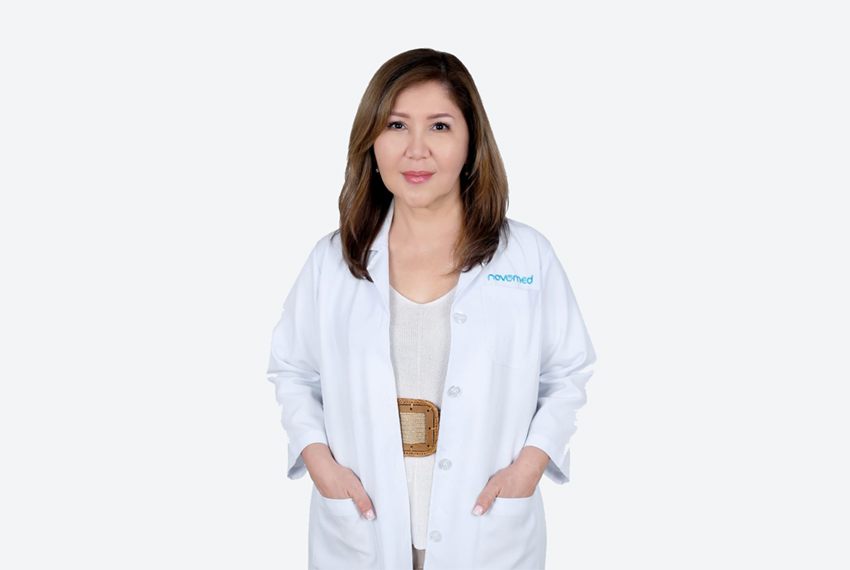
This is precisely the path taken by Gulzhan Saipova, a cosmetologist and laser therapist who was recently ranked among the Top 10 Aesthetic Ateliers by the international glossy magazine FAME Delivered (The Performers Edition 2026).
In an interview with 24.kg news agency, she spoke about her challenging journey to success.
— How did your career begin?
— My path to medicine began in my homeland with the fundamental foundation I received at Efim Yakir Physics and Mathematics School-Lyceum No. 61, an experimental class with an in-depth program in chemistry and biology. Even then, I knew I wanted to dedicate my life to medicine. In 1992, I graduated from the Kyrgyz State Medical Institute, choosing one of the most responsible and sensitive specialties—obstetrics and gynecology.
I received my professional training at Maternity Hospital No. 2. It was there that I learned to feel a tremendous responsibility for the lives of others and to make decisions in difficult situations. Then came a private clinic in Bishkek and my first independent decisions.
But the times were difficult. Our generation of doctors was shaped between two eras: the Soviet system had collapsed, and a new one had not yet fully formed. The lack of state support and clear prospects pushed me to look for opportunities for professional growth abroad. This led me to a life-changing decision: to move to the United States to study, grow, and see how medicine works in a different environment.
Over time, I decided to stay and work there. That was a turning point in my life. It was there that I first encountered aesthetic medicine—a rapidly developing industry. My first chemical peels, fillers, and Botox procedures all happened during that period.
— What inspired you to choose aesthetic medicine?
— I have always loved art, and at some point I realized: this is where medicine and creativity meet.
Aesthetic medicine is not only about beauty—it is primarily about promoting a healthy lifestyle and longevity while preserving youth, natural appearance, and individuality. It is a field where not only medical knowledge matters, but also a sense of harmony, proportion, and aesthetics.
Aesthetic medicine isn’t about chasing youth and correcting «flaws»; it’s about health and working with a person’s inner state, their confidence and self-perception.
— How do you remember your first experience in cosmetology?
— It was very emotional: excitement, high responsibility, and, at the same time, profound inspiration. Then I realized that the results of my work impact not only a person’s appearance but also their inner state. When a patient begins to feel more confident and see themselves differently, it’s much more than just a medical procedure. This is the best motivation to continue and improve, and it’s what has kept me in the profession all these years.
— What did working in the USA give you?
— Moving to the USA was a step toward a completely new level of advanced medicine in the most developed country in the world. I worked at a private cosmetology clinic in the state of Michigan, where I encountered a system built on clear protocols, evidence-based medicine, and strict quality control.
This taught me discipline, systematic thinking, and attention to detail—it became a true professional school. In American medicine, there is no room for randomness; every step is clearly regulated, which creates a high level of trust.
— What challenges did you face as a migrant in a new country?
— Migration is always a challenge. Like anyone, I had to adapt. The most difficult part was adjusting to a multinational culture and professional environment. But it also provides a strong push for self-assertion and resilience.
In the U.S., specialized expertise, high competition, and impeccable punctuality are valued.
Gulzhan Saipova
I had to prove my competence all over again. It’s a different pace, but such challenges build character and make a specialist more flexible, stronger, and more competitive.
— What was the most unexpected aspect of working in an American clinic?
— I was amazed by the level of technological equipment and the standardization of processes. Every action of a doctor is strictly regulated—from consultation to post-procedure follow-up.
I was also impressed by the approach to safety: it comes first. Patients receive the most transparent and understandable treatment system where uncertainties are minimized. And, of course, insurance plays a major role.
— Why did you decide to return to Kyrgyzstan?
— While working in the U.S., I accumulated extensive professional experience and felt a strong desire to apply my knowledge and introduce these standards into practice in Kyrgyzstan.
From 2007 to 2010, I worked in Kyrgyzstan. It was an important stage, even if not the longest. I wanted to contribute to the development of aesthetic medicine in our country and share what I had learned abroad.
I observed different approaches: our patients are open, warm, and looking for ‘their’ doctor—someone they can fully trust. Abroad, relationships tend to be more formal, built on protocols and legal responsibility.
I decided that my style would be a synthesis: Western strict protocols and our sincere, human attitude toward everyone who comes for help.
Gulzhan Saipova
It was in Kyrgyzstan that I learned to see the face as a living, individual story, not a set of areas for correction, but a holistic image. This now helps me even in the most unusual cases.
Kyrgyzstan gave me invaluable clinical thinking skills. Here, doctors learn to see the patient holistically, consider many factors, and quickly adapt to conditions. It was here that my professional intuition, the ability to empathize with the patient and understand their needs more deeply, were formed.
— Why did you choose Dubai for the next stage of your career? How difficult was it to get into the market?
— I realized I wanted to develop in an international environment and needed a new, global scale. Dubai was a logical choice: it’s a rapidly developing center for aesthetic medicine, home to cutting-edge technologies and specialists from all over the world. I moved to the UAE in 2010. It was the perfect place and time for a specialist: to grow with the market, develop, and work on a global level.
It was a complex and lengthy process. I witnessed the formation of this market from within. Breaking into the market was not easy: the UAE has an extremely strict licensing system. You must meticulously verify your education (every diploma, every year of practice, every certificate), your work experience, and pass multiple checks.
In addition, the competition is incredibly high, with top specialists arriving from all over the world. But this path—full of scrutiny and challenges—creates a strong professional environment and allowed me to build a name that now works for me. In Dubai, a reputation is built over years, which is why it is trusted.
Here, doctors must constantly learn. Technologies in the UAE evolve rapidly. You must be proficient in them, both hardware and injection technologies, and stay up-to-date on all global trends and innovations. Communication skills are equally important, as patients come from all over the world. A high level of service is essential.
— What does it mean to you to be included in the Top 10 by an international publication?
— It is recognition of many years of hard work and confirmation that I chose the right path. From a medical student in 1992 to a practicing physician in Dubai—this journey represents years of effort, exploration, and growth. For me, it is not only a personal achievement but also proof that my training and experience meet global standards in a market where thousands of outstanding doctors work. It reflects not only my professionalism but also the strength of the school that shaped me. And it is a great responsibility to my patients.
— Which procedures are most in demand among clients in Dubai?
— Today, natural results are the priority. Patients aim to improve skin quality rather than change their appearance. Currently, laser treatments, bioremodeling, and advanced ultrasound-based rejuvenation techniques are at their peak.
My goal is to ensure that patients look natural, fresh, and well-groomed—while preserving their individuality.
— How has aesthetic medicine changed in recent years?
— It’s undergoing a revolution. The global trend is naturalness, individuality, and healthy skin. The main focus is on preserving youth and combating age-related changes. Technologies are becoming more precise, safe, and less traumatic. We no longer mask the signs of aging, but rather program skin cells to function in youthful mode, working proactively. This makes procedures accessible and effective.
— How honest do you consider the aesthetic medicine industry?
— In the premium segment, the industry is extremely transparent.Reputation is the main asset. Deception is impossible—it destroys a career instantly. My patients are highly educated and demanding; they value transparency and an evidence-based approach. Honesty is the only foundation for a practice built to last decades.
However, unscrupulous practices can be encountered in the mass market. Therefore, it is important to choose qualified specialists.
Gulzhan Saipova
— Do practitioners sometimes perform procedures just for profit, even if they are not really needed?
— Unfortunately, such cases do exist. For a professional, this is unacceptable. I always act in the patient’s best interest and would never prescribe an unnecessary procedure. Trust is the greatest value and the foundation of long-term relationships. It cannot be sacrificed for short-term gain. Thanks to this trust, many of my patients stay with me for years.
— Have you had professional mistakes that are difficult to recall?
— Like any doctor, I have faced challenging cases. One of the hardest lessons for me was learning to say «no,» especially when a patient insists on a procedure that is not suitable and contradicts medical indications. Saying a firm «no» to protect a person from a serious aesthetic mistake is true professionalism.
— How do you deal with difficult or «celebrity» clients?
— I follow the principle of equal treatment for everyone: once inside the consultation room, all statuses disappear. In front of a doctor is always a person—with their fears and hopes. Regardless of status, everyone expects professionalism, respect, and confidentiality.
— What has been the most difficult aspect of emigration for you?
— I have lived in the United Arab Emirates for a long time now, and Dubai has become my home. My life, family, work, and patients are all here. Despite success, emigration comes with a price. The most painful aspect remains distance. The hardest part has always been—and still is—being away from loved ones. No matter how successful your journey is, you miss family holidays, birthdays, and even simple everyday evenings together.
— Were there moments of loneliness despite your success?
— There were moments of fatigue. But when you see the results of your work, it gives you the strength to keep moving forward. This is what builds inner resilience and helps you better understand yourself.
Even though the United Arab Emirates has become my home, there will always be a place in my heart for Kyrgyzstan. I miss our nature—the mountains, the crystal-clear air, the clean water, and natural products. I also miss Kyrgyz traditions and the warmth of family gatherings.
No matter where I am, the connection to my homeland remains a part of me.