


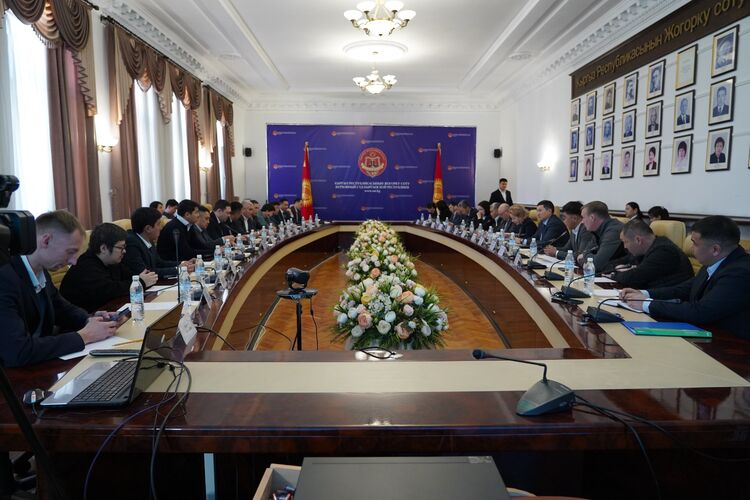
On February 4, the Supreme Court of the Kyrgyz Republic hosted a meeting dedicated to cybersecurity issues in the judicial system.
At the meeting, Supreme Court judge Inara Gilyazetdinova, chair of the working group on the digitization of the judicial system, outlined a set of systemic issues related to personal legal liability in the event of data leaks, management of access to court IT systems, protection of work stations, video surveillance systems, audio and video recording of court proceedings, as well as physical access control and response to other incidents.
Particular attention was paid to the lack of a clear division of powers and responsibilities between the authorized bodies and officials involved.
The need to ensure transparent accounting of user actions, access and copying of information, as well as the development of effective mechanisms for responding to incidents, backing up and protecting the integrity of databases was noted. In addition, issues of interagency cooperation, conflict resolution and compliance with confidentiality requirements were addressed.
According to Ruslan Myrzalimov, advisor to the Chairman of the Supreme Court, in the context of growing hybrid threats, the cybersecurity of the judicial system is taking on an institutional and constitutional-legal character, as it is directly linked to guarantees of judicial independence and the protection of the rights of participants in judicial proceedings.
«The independence of the judiciary implies not only the organizational and functional autonomy of judges, but also the information security of judicial activities. In the context of digitalization, any unauthorized interference in judicial information systems can affect the content or timing of case consideration, create levers of external pressure on judges, and discredit judicial decisions in the eyes of society.
Thus, the cybersecurity of the judicial system acts as an instrumental guarantee of the principle of judicial independence, ensuring that covert influence through digital infrastructure is impossible.
The cybersecurity of the judicial system should be viewed as a legal and institutional guarantee of judicial independence, rather than as an auxiliary technical element,» he noted.
In accordance with the Presidential Decree «On Measures to Further Improve Digital Transformation in the Sphere of Public Administration,» the material and technical base of Adilet Sot information technology institution under the Judicial Department has been transferred to Tunduk OJSC.
In this regard, Tunduk, as a digital infrastructure operator, is responsible for the sustainable functioning of court information systems, the protection of court data, and the prevention and response to cyber incidents. The company must ensure the security and integrity of data, the smooth operation of information resources, and establish a transparent monitoring and accountability system in cooperation with the judicial department and other authorized state bodies, primarily Ukuk state agency under the Prosecutor General’s Office, to which the technical infrastructure of the judicial system has been transferred.
A representative of Ukuk expressed confidence that the smooth operation of the existing infrastructure would be ensured.