
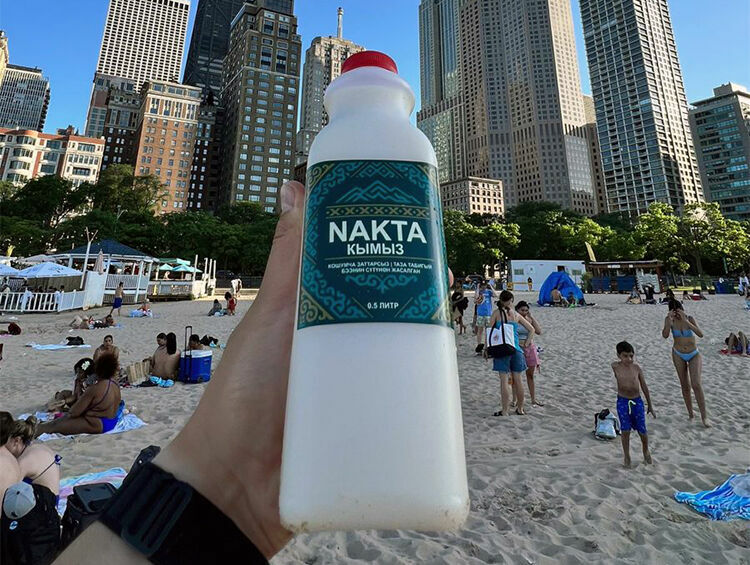
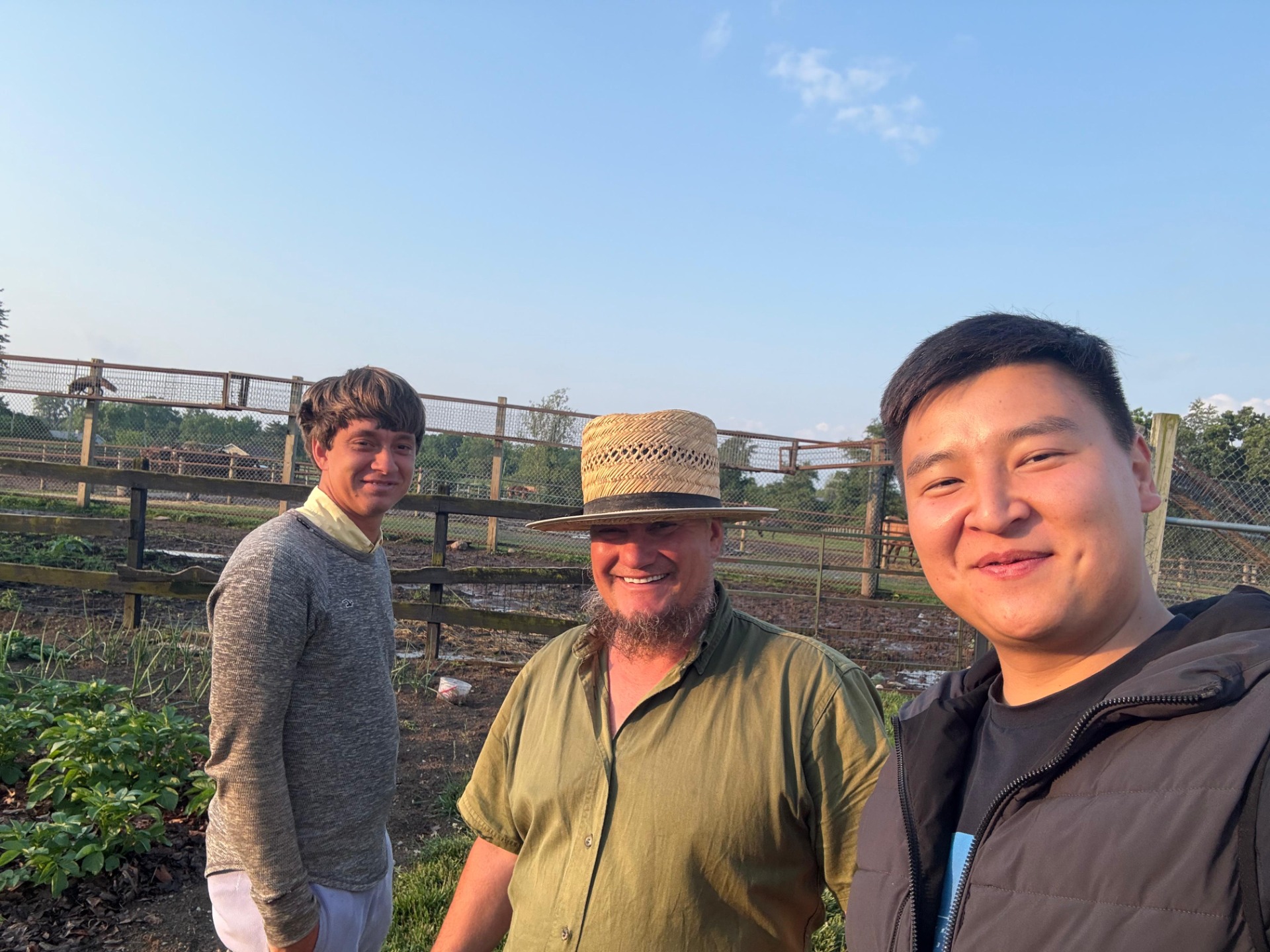
Asan Maksatov and his cousin Askar Satarov make kymyz, the traditional fermented mare’s milk beverage, in the United States. On a farm in Indiana, they get milk from their own mares, which is then processed into kymyz in Chicago. According to the cousins, the idea emerged back in 2022, shortly after they arrived in the U.S.
In an interview with 24.kg news agency, Asan Maksatov told how they started their venture with just three liters of kymyz and how they managed to bring the drink from Kyrgyzstan to America.
— Tell a little about yourself. Where are you from, and how did you end up in the U.S.?
— I was born in Bishkek, but my parents are from Toktogul district. I studied at school No. 67 and graduated from Ala-Too International University. I was in Germany during my student years. In 2022, I came to the U.S., and I’ve been here for three years now.
— How did the idea to make kymyz in the U.S. come about?
— I used to spend every summer in a village and drank kymyz there. In the U.S., before starting production, I worked in delivery, as a taxi driver, and a truck driver. I noticed that kymyz simply didn’t exist here. I even searched on Amazon—there were only some tablets and a mixture, and they cost $80–90 per liter. Neither Kazakhs nor Mongols were producing kymyz here.
In April, my cousin and I started thinking about launching our own production, and within two months, we made it happen.
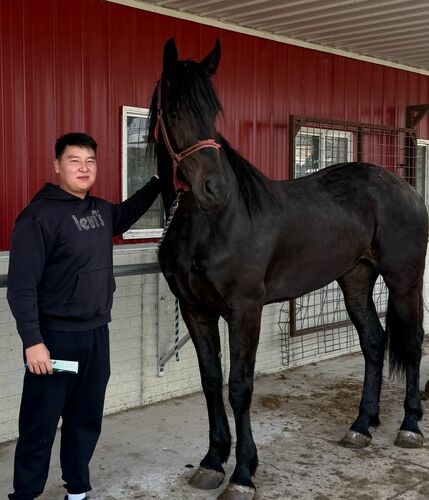
— We spent a long time looking for mares with foals, because without foals, mares don’t produce milk. Americans are very sensitive about this issue and don’t sell mares.
We went to various auctions in different states, visited multiple farms. After about a month of searching, we finally found someone who agreed to sell us eight mares. Then we found a farmer in Indiana who agreed to keep them. We milk the mares on that farm and transport the milk to Chicago. Here we have a room with a refrigerator. A fellow Kyrgyz who runs a café agreed to rent us part of his premises.
— Essentially, if you have 5 liters of kymyz, you mix it with 5 liters of fresh milk. There’s a special tool—a wooden churn stick called a «bishkek» —that you have to use to stir the liquid for about an hour and a half. Then you leave it in a chanach (a traditional vessel for storing kymyz) for 24 hours, and it ferments on its own. When making kymyz, you need to start with a 50 percent starter culture to mix with the milk.
We had trouble obtaining the starter, because we needed to bring kymyz from Kyrgyzstan. At first, some people were supposed to deliver four liters to us, but they drank one liter on the way. The woman who carried it told us her child drank it. She said she left for just five minutes, and he drank it all. We had already paid her $200 for those four liters. We didn’t have much anyway, and then they drank 1 liter. So, we started with those three liters. Gradually we made six liters, then 12, then 24.
Also, kymyz needs to be stored in a chanach, a container made from goat hide. In Kyrgyzstan, very few people still make them. We found someone who crafted one for us for $250. It’s necessary because it gives the kymyz a smoked flavor.
— How do Americans react when they try kymyz for the first time?
—Kumyz hasn’t reached the Americans yet. Everything gets bought up by our people. Kazakhs, Mongols, and Tatars buy it all. We can’t produce enough so far.
— Do you plan to expand production?
— We haven’t thought about that yet because it’s seasonal work.
— What’s your brand name?
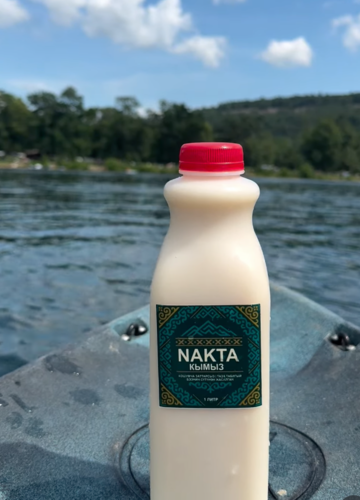
— «Nakta» (which means «natural» in Kyrgyz). The name was my cousin’s idea. He was born in Toktogul and knows all the nuances of production. I do advertising.

— If it’s not a secret, how much did it all cost? What was your budget?
— About $50,000. We haven’t broken even yet, but the production volume is good. If we sell all our stock, it will pay off.
— How much does one liter of kymyz cost?
— At first, we set the price at $50, because the cost price per bottle was $27. People started complaining, so we lowered it to $40.
— What does kymyz mean to you personally? Is it more of a business, nostalgia, or a cultural mission?
— It’s more of a cultural mission. Kymyz is a health drink—it really has a lot of beneficial properties. There are people here who can’t go back to Kyrgyzstan, but they can come and buy 5–10 liters. I even sent some of our kymyz back home to my parents and friends, and they loved it.
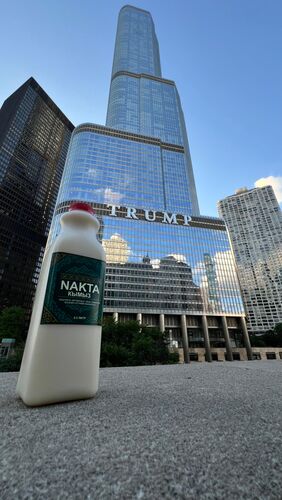
— No, there was even a time when we wanted to sell kymyz at their events. We were told: 20 percent of the income. Well, it’s business, nothing personal.
— What legal or sanitary issues did you face in the U.S. when producing kymyz?
— We don’t have a license for it, because such a license simply doesn’t exist. Our production is intended just for our community.
— What would you like to say to other Kyrgyz living abroad and missing home?
— I sincerely believe that they will succeed. You never know what battle someone is fighting right now. I want all their dreams and wishes to come true.