

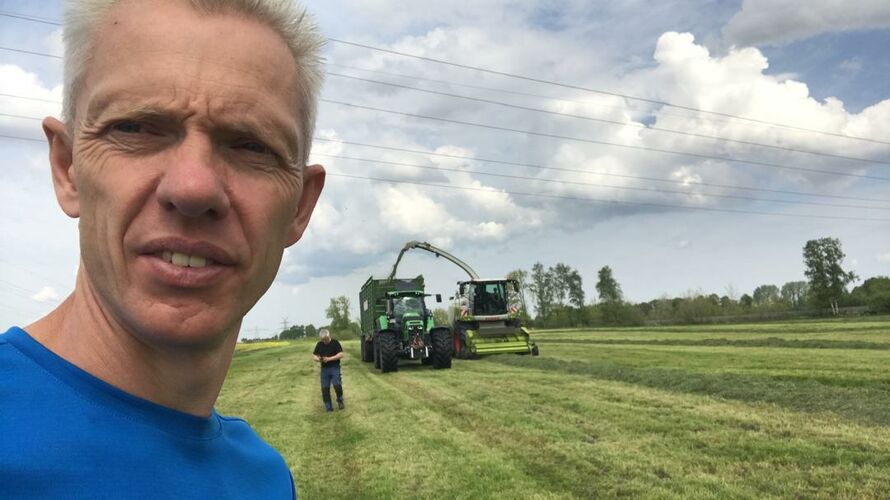
Andre Wolkorte comes from Losser village in the Netherlands. He is a chemical process engineer by education, and he worked in several industries in the Netherlands: as a crane driver, electrician, and engineer in a leather company. He first visited Kyrgyzstan in 2007, and has been living and working in the republic for 14 years already. Andre told about his experience in an interview with 24.kg news agency.
— I first came to Kyrgyzstan in 2007 as a tourist, then I met a translator named Gulzhan. A year later we got married, had lived in Holland for 1.5 years, and in early April 2010 we returned to Kyrgyzstan when there was a revolution. But it did not frighten us, we lived in Karakol, and it was calm there.
— How did you adapt to a new living environment, new country?
— After living here for a certain period of time, you better understand the culture and mentality of the people. The work in Kyrgyzstan is hard, but because of our own business, I enjoyed it a lot more. It is good to be your own boss and have more freedom. I like the climate and nature in Kyrgyzstan. My wife and her family have helped me adjust to the culture. We are raising two children.

— I have worked 14 years in tourism, running a tour company and a guest house together with my wife Gulzhan. Up to 95 percent of our clients were foreigners, so we had hard time during the COVID-19 pandemic, there were no tourists. I started looking for other business opportunities.
Serving my clients in the guest house in Karakol, I came across the fact that I did not like the cheese from the supermarket. I decided to try to produce it myself. That’s how the idea of opening a cheese farm came about.
In 2023, I spent a few months in Germany on a farm with 180 cows. There I learned how to make cheese delicious. This business turned out to be very interesting. After returning to Kyrgyzstan, I worked for a while at a dairy in Karakol and then on a small farm in Aral, which was opened by another Kyrgyz-Dutch family.
Now we live in Aral in a house, where I make my own cheese.


— So far I have two varieties in production: one with black pepper using German technology and the second without pepper using Swiss technology. This is organic product.
I am thinking of launching other varieties, but it takes time. It takes me two or three months to produce cheese, although a good hard cheese can ripen for six months, a year, and even more.
I attach great importance to the cheese making process, so I only buy milk from trusted, good suppliers. Otherwise I would be too busy taking care of the cows. By making the cheese myself, I understand the quality of milk I need, and I can see in the production process whether it is bad or good. Feeling, smelling and seeing is important.
— Where do you sell your products?
— In Bishkek. I supply cheese to several retail outlets and participate in organic fairs. I also want to export cheese to Russia and Kazakhstan, so I plan to expand production.
— What regions of Kyrgyzstan have you managed to visit during this time? Do you have any favorite places in the country?
— I have travelled a lot in Kyrgyzstan because of my work in the tour company. Batken is the only place I haven’t visited.
I love Karakol city, it is beautiful and is located in a great mountain area. The best place for a visit is Sary-Chelek Lake.


— Aral village, where I live now, has a lot of water and trees, reminding me of the Netherlands.
— How are your relations with Kyrgyz people? In what language do you communicate with the local population?
— I can speak five languages: German, English, Dutch, a little bit of Russian and Kyrgyz. The last two are difficult for me, but I am trying to learn them better. I mostly communicate with the children in English, but they speak Kyrgyz and a little Dutch.
In Karakol I have good relations with the people. I am a newcomer in Aral, but I am slowly making new friends here too.


— The good school system, quality products, varieties of food, good healthcare, good roads. I miss more respect from people behind the wheel to other drivers. Driving and parking in Bishkek is exhausting. But I still want to live here.