

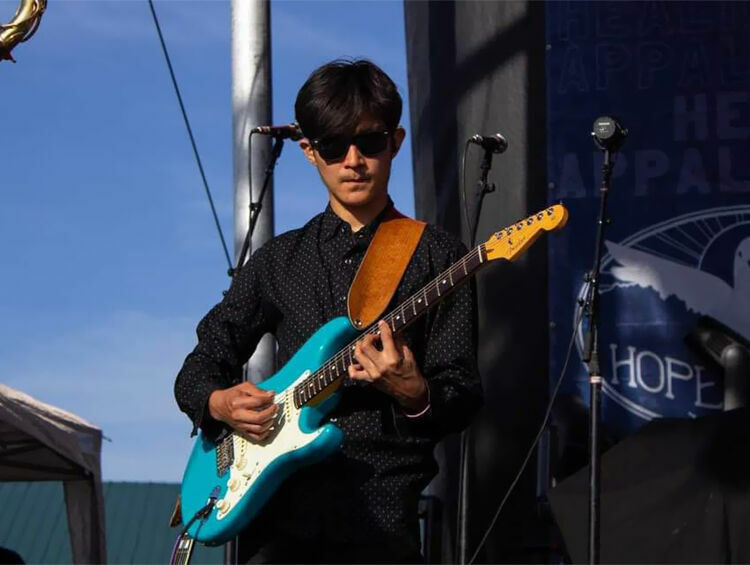
Kasym Moldogazy graduated with honors from the Kyrgyz National Conservatory in 2020 and spent two years performing with the well-known jazz band Solenye Oreshki (Salty Nuts). In 2021, he entered the jazz master’s program at the University of Louisville School of Music in Kentucky, USA.
Now Kasym, 28, is a multi-genre virtuoso guitarist who moved to New York City in 2024. In an interview with 24.kg news agency, he shared insights into his life and creative journey.
— Kasym, you graduated from the National Conservatory. What did your studies mean to you, and how did they influence the development of your style?
— For me, studying is an endless process. Whether you’re in a higher education institution or not, you must always keep learning. At the conservatory, there were teachers who genuinely cared about their students and worked hard to pass on their knowledge. But like any educational institution, it was constrained by bureaucracy and systemic issues. I often had to spend time on subjects that were unlikely to be useful later, which took energy away from what really mattered — music.
During my first two years, I tried hard to excel academically. But over time, the rigidity of the system and the pointlessness of some requirements became exhausting, and I sometimes wanted to quit. The only thing that kept me going was the thought that if I graduated and received my diploma, I could apply for a scholarship to study for a master’s degree in the United States.
It’s hard to say exactly how the conservatory influenced my playing, but it gave me something crucial — discipline. It taught me how to prepare for exams, memorize complex pieces, and perform under stress.
Kasym Moldogazy
All of that made me stronger as a musician. At the same time, I believe that real growth happens outside the classroom — in what you listen to, what you work on, and who you play with. That period of my life was full of experiences: many events, aspirations, interactions with musicians, playing in various bands and orchestras. All of this became the foundation of my understanding of music and my true university.
One of my teachers at the conservatory, Bakyt Kydykbaev, truly cared about his students and their future. Almost every day after class, I would go to room number 9, where he practically lived. That’s where we prepared for performances, learned new compositions, and discussed philosophy, life, and music.
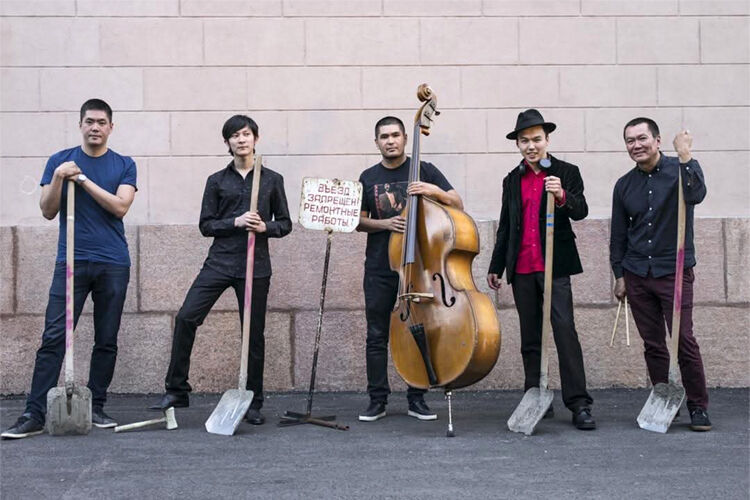
— What kind of experience did performing with the jazz band Solenye Oreshki give you?
— We played several times a week at different venues, events, weddings, and corporate parties both in Kyrgyzstan and abroad. Our repertoire included jazz standards, funk, rock, and pop music. It was an experience I couldn’t have gained anywhere else in Kyrgyzstan — playing with musicians far more experienced than I was. I’m grateful to have had such mentors.
— What motivated you to pursue a master’s degree at the University of Louisville, and what were your biggest discoveries there?
— For several years in a row, I applied to different universities in the United States that offered full scholarships in jazz programs. At that time, Michael Tracy, the director of the jazz department at the University of Louisville, was the only one who responded — that’s how I ended up there.
One of the biggest discoveries for me was realizing that American universities also suffer from outdated systems and academic approaches. During my first year, I was quite frustrated — there was almost no time to actually practice my instrument, as most of my time went into paperwork and assignments unrelated to performance.
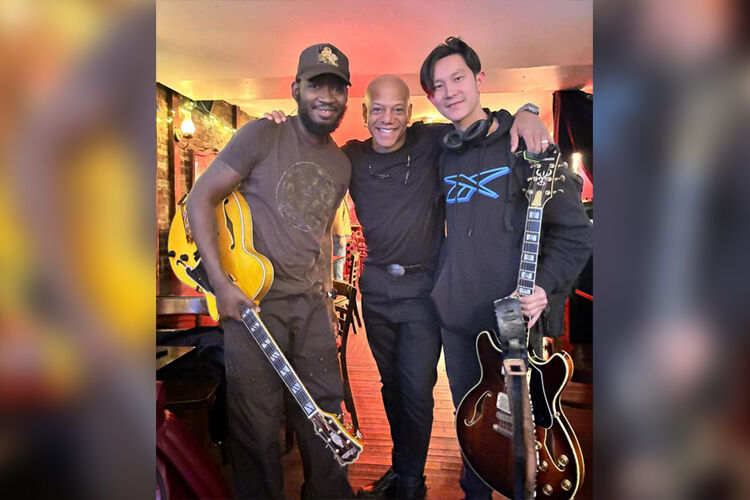
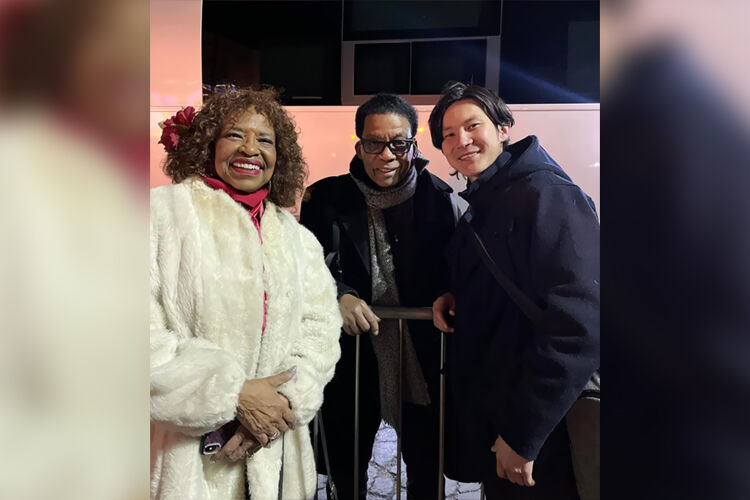
Being a full-time student there meant almost no personal time. Most of my day went into homework and class preparation. If I spent a few hours practicing or going to a jam session, I did it at the expense of my grades. After the first semester, things got a bit easier, but the program remained very intense.
— How did your journey toward obtaining the O-1 visa go? Was it a difficult process for a musician from Kyrgyzstan?
— It was a challenging process. I had to collect every possible document from my childhood onward — where I studied, performed, what festivals and competitions I took part in, who of well-known musicians I played with, and which prestigious stages I had performed on.
I asked for recommendation letters from musicians I admired — people who had achieved great success. It was important for them to recognize my level of talent, because the application materials had to present me as an extraordinary musician.
The first time, my application was almost rejected — I had to add more documents and thoroughly explain how I met the criteria. Initially, the recommendation letters didn’t work, so I reached out again to my mentors and other influential musicians, asking for letters of support.

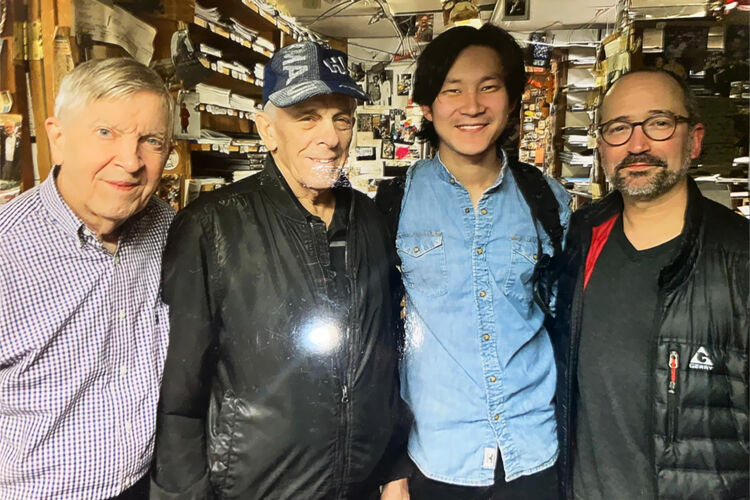
If I had stayed in Kyrgyzstan, I probably wouldn’t have been able to get this visa, because so much of the process depends on connections and professional relationships built in the U.S.
— How was your adaptation to life in the U.S.? What surprised you the most?
— The adaptation was intense and, in many ways, surprising. On the positive side, I was amazed by the people: incredibly kind, generous, grounded, and ready to offer moral support. No one ever made me feel like an outsider or «different.» I always felt accepted.
Even when I played in African American churches, I never felt out of place. Interestingly, back in Kyrgyzstan, I sometimes did feel different — people even told me so directly more than once. But here, that never happened.
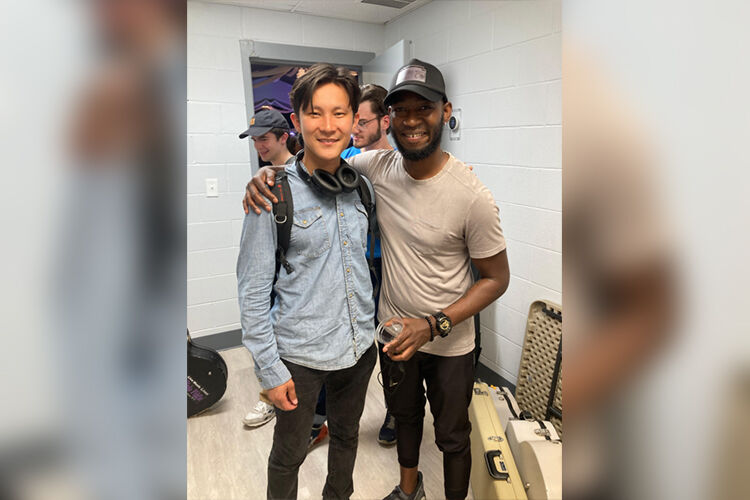
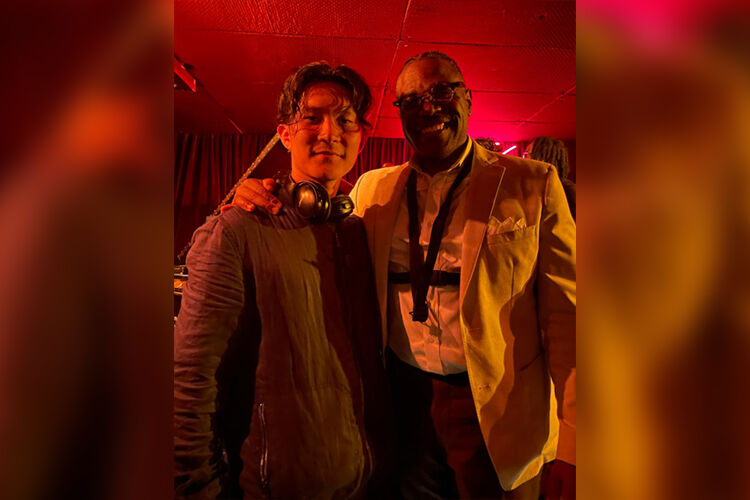
New York is completely different. You don’t need a car here — the public transport system is excellent: subways and buses can take you anywhere. People walk a lot, move around more, and generally look healthier. For me, that was a big plus and one of the main reasons I feel truly comfortable living here.
— What did moving to New York, one of the world’s jazz cities, mean to you? What do you do, where do you perform? Which performances have stood out the most?
— I’d dreamed of coming to New York since I was 18, and now I’m literally living the life I imagined for nine years. It’s an incredibly vibrant musical city, home to world-class music of every genre. Jazz is everywhere — you can find opportunities to listen or play almost 24/7, and that’s deeply inspiring.
In New York, I perform in clubs and at concerts in a wide range of styles: jazz, R&B, soul, funk, rock, and pop music. I also play gospel in churches, record sessions, and take part in any performing projects that both pay and help me grow as a musician.
During the day, I teach music at a school for about three hours, and at night I go to jam sessions, perform, meet new people, and play in clubs across the city and beyond.
Among the memorable venues I’ve played at is Arthur’s Tavern, a historic club founded in 1937 where jazz legends like Charlie Parker, the Count Basie Orchestra, and Roy Hargrove once performed. I also had the chance to play at Minton’s Playhouse before it closed — the very birthplace of bebop, often mentioned in jazz history books I used to read.
At Ashford and Simpson’s Sugar Bar, artists like Stevie Wonder, Alicia Keys, and Quincy Jones have performed. I often play at The Groove, a club known for R&B, soul, and funk, and at jam sessions at well-known venues like Smalls, Mezzrow, and Ornithology.
— Do you feel that, through your music, you represent Kyrgyzstan on the international stage?
— It’s hard for me to say. I do listen to Kyrgyz music, and it definitely influences my creativity in some way. So perhaps, through that, parts of my work carry elements of Kyrgyz traditional music to the international scene. But overall, I just focus on playing music and growing as a performer.
— How do American audiences respond to the elements of Kyrgyz folk music that you incorporate into jazz?
— Jazz is a multicultural art form, and audiences here always welcome new and unusual sounds. Jazz has always been woven from the music of different nations, ethnicities, and unique voices that bring something fresh. Personally, I find it exciting when music sounds new. The New York jazz scene is vast — both in the number of musicians and in stylistic diversity. In Bishkek, by contrast, the jazz community is quite small, made up of just a few musicians.
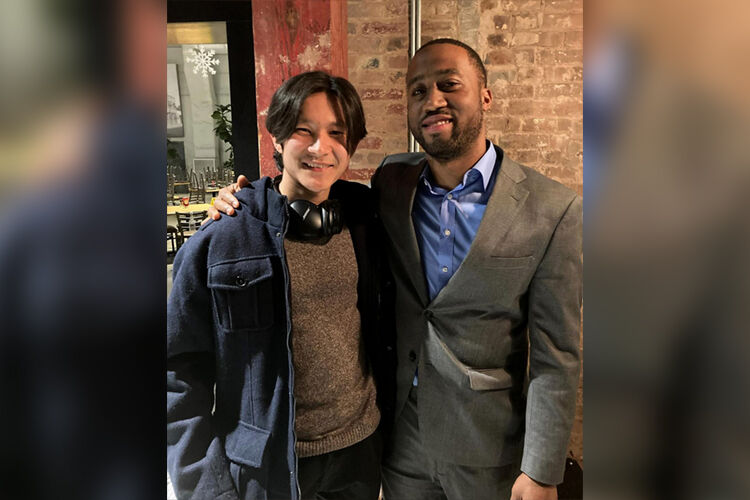
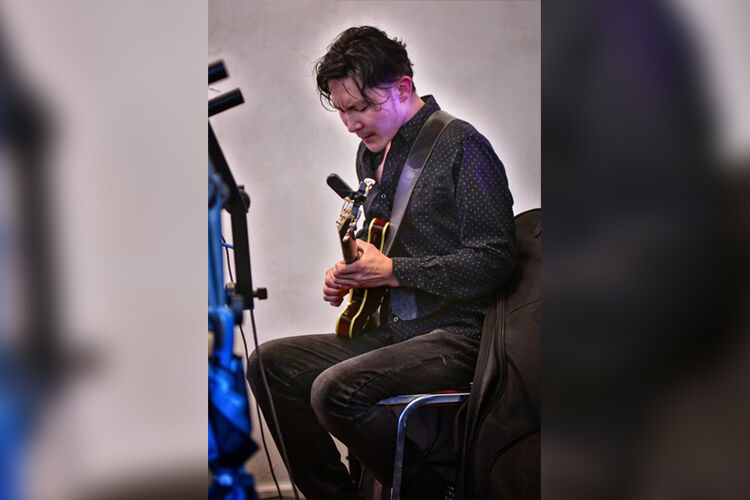
— Right now, I’m mainly working on expanding my repertoire across different genres. When I’m invited to perform, I usually get a set list to learn quickly — sometimes just a couple of days before the event. I also work on songs and pieces that every musician is expected to know in various styles, because often there’s no time to rehearse. It’s like: «Are you free tonight at 9?» You show up and play — sometimes without even knowing who you’ll be performing with.
At the same time, I’m developing my own concepts inspired by Kyrgyz music.
Kasym Moldogazy
Kyrgyz melodies often use fourths, fifths, and thirds, and I decided to apply those intervals in my accompaniment and improvisations — regardless of genre.
Interestingly, the result no longer sounds like traditional Kyrgyz music, yet it works organically in many contexts and, I think, sounds good. I don’t have any festivals planned in the near future, but the musical life here is very spontaneous — invitations often come at the last moment. The main thing is to stay open and available.
— You teach and give private lessons. Is it difficult to work with children? How important is teaching to you?
— Working with children can definitely be challenging, especially when there are 15–20 students in a class and not enough guitars for everyone. Still, I see it as a meaningful and valuable experience. I work with the New York Edge nonprofit organization, whose mission is to help close the opportunity gap for students from underserved communities. It’s especially inspiring when one or two kids show a real passion for learning guitar and find a way to get their own instrument to practice at home.
I also teach adults. Passing on knowledge is very important to me — I feel my mission is fulfilled when I can help someone progress on their musical journey and speed up their development. I have mentors who have helped and continue to help me, too — we need each other. This mutual exchange of experience makes learning deeper and more meaningful.
— What challenges have you faced as a young immigrant musician in the U.S.?
— Visa restrictions.
— How do you see your future in 5-10 years? What do you dream about?
— I see my future in continuing what I do now — but on a higher level. I want to perform even more, take part in interesting projects — both my own and in collaboration with other musicians. Of course, I hope to see progress in my playing, expand my repertoire, and have more opportunities to perform with world-class artists. And, naturally, to achieve greater financial independence.
— What do you miss most about home?
— Strong kumys!
— How often do you visit Kyrgyzstan?
— I haven’t been back once in the four years I’ve lived in the U.S.
— What would you like to say to young musicians from Kyrgyzstan who dream of performing on the world stage?
— The most important thing is not to be afraid and not limit yourself. Learn to filter out everything that hinders your thinking and growth. If something doesn’t work out or someone tells you it’s impossible — don’t agree with them.
It’s important to write down and visualize the life you want, and work toward it until you achieve it.
Kasym Moldogazy
I’ve heard plenty of discouraging things myself: «You’ll never make it,» «You should quit music and choose another profession or you’ll be disappointed,» «Jazz isn’t for everyone,» «You won’t learn to play here — there’s no environment for it,» «You can’t study in New York — you have to go there already prepared,» «There are a million musicians like you in New York — you won’t survive there» and so on.
My advice: don’t compare yourself to anyone else. There’s no one exactly like you — everyone has their own unique path.