

From August 31 to September 1, the city of Tianjin, China, will host the next summit of the Shanghai Cooperation Organization (SCO).
Participants will review the organization’s work, draft a development plan for the next decade, and discuss strengthening cooperation in security, economy, and culture.
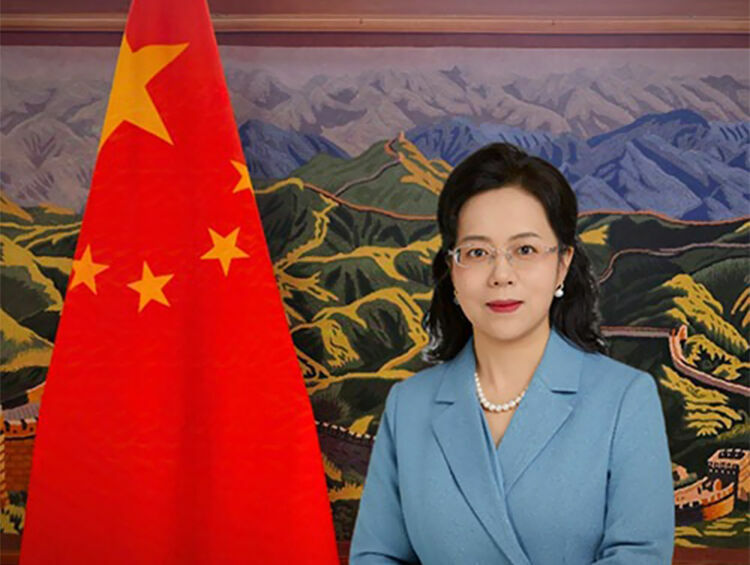
On the eve of the event, Chinese Ambassador to Kyrgyzstan Liu Jiangping shared her views in an interview with 24.kg news agency.
— Madam Ambassador, how do you assess the preparation and work of the upcoming SCO summit?
— In 2001, the leaders of six countries — China, Kyrgyzstan, Kazakhstan, Tajikistan, Uzbekistan and Russia — in line with historical trends and the spirit of the time, signed the Declaration on the Establishment of the Shanghai Cooperation Organization, officially announcing the birth of a new international organization. Over 24 years of development, the SCO has expanded into a «big family» that now includes 26 countries: 10 member states, 2 observer states, and 14 dialogue partners.
Today, it is the largest regional international organization in terms of territory and population, playing an important role in promoting peace and development both in our region and globally.
The 2025 SCO summit will be held in Tianjin from August 31 to September 1. This is the fifth time China will host an SCO summit, and it will be the largest since the organization’s founding. Chinese President Xi Jinping, along with more than 20 foreign leaders and 10 heads of international organizations, will attend the summit to review the SCO’s achievements, outline the organization’s development plan, strengthen consensus within the «big SCO family,» and advance the goal of building a closer community with a shared future.
At the summit, the leaders of SCO member states will sign the Tianjin Declaration and the SCO Development Strategy for the next 10 years, issue a statement marking the 80th anniversary of Victory in the World Anti-Fascist War and the founding of the United Nations, and adopt a number of final documents aimed at strengthening cooperation in security, economy, and humanitarian exchanges. These will set the course for the SCO’s future development.
— Madam Ambassador, when we talk about the SCO, we cannot overlook the «Shanghai Spirit,» which is the Organization’s doctrine and its most important value. What are the characteristics of the «Shanghai Spirit»?
— From the very beginning, SCO member states put forward the «Shanghai Spirit» — mutual trust, mutual benefit, equality, consultation, respect for the diversity of civilizations, and commitment to common development — and over the past 24 years, they have consistently put it into practice.
The «Shanghai Spirit» corresponds to the trend of democratization in international relations. Its essence lies in the pursuit of fairness and justice, in the recognition of the sovereign equality of all states, and in opposing hegemony and the policy of force. SCO member states are located on two continents — Europe and Asia — and differ significantly. Yet, all countries here adhere to the principles of mutual respect and equality. Decisions are made by consensus, with the interests of all parties taken into account. The SCO has become a vivid example of building a new type of international relations.
The «Shanghai Spirit» reflects the aspiration for security and stability.
Humanity lives on one planet, and no state can ensure its own security in isolation from global security or at the expense of the vulnerabilities of other members of the international community.
The SCO advocates the concept of common, comprehensive, and sustainable security based on cooperation, upholds the principles of openness, transparency, and non-alignment against any third party, and promotes dialogue over confrontation, partnership over bloc-building.
The «Shanghai Spirit» also meets the historical trend of cooperation and mutual benefit. In today’s world, national economies are deeply interconnected. The SCO adheres to the concept of cooperation based on openness, mutual benefit, and shared success, while firmly rejecting selfish, shortsighted, isolationist, and narrow-minded policies. The Organization supports the norms of the World Trade Organization and the multilateral trading system, and contributes to the creation of an open world economy. Mutually beneficial cooperation between countries is enhanced by economic complementarity: resources, markets, capital, and technology. Moreover, the SCO’s expanding space offers broad opportunities for cooperation.
The «Shanghai Spirit» reflects the shared aspiration for mutual enrichment of civilizations.
The SCO region is the cradle of ancient civilizations. Our countries differ in historical and cultural traditions, ethnic groups, religions, beliefs, and social systems. The SCO advocates respect for cultural diversity, emphasizing that dialogue among civilizations is an effective way to overcome disagreements and conflicts, and that civilizations are enriched through exchange and mutual learning. Unlike theories of the «superiority of civilizations» or the «clash of civilizations,» the SCO supports a concept of civilizations based on equality, mutual learning, dialogue, and inclusiveness, creating a unique «garden of flourishing cultures» where different civilizations can coexist peacefully and enrich each other.
— Today, security is a top priority for many countries around the world. How is this cooperation developing within the SCO framework?
— The SCO is a new format of regional interaction that emerged after the end of the Cold War. Its predecessor, the Shanghai Five, was focused on eliminating the threats left over from the Cold War and shaping a new approach to security.
Security cooperation has been developing productively. The parties are jointly combating the «three forces of evil» — terrorism, extremism, and separatism. The SCO Convention on Combating Terrorism, the SCO Convention on Countering Extremism, and the Agreement on Cooperation in Combating the Illicit Trafficking of Narcotic Drugs, Psychotropic Substances and Their Precursors have all been signed.
The Regional Anti-Terrorist Structure is actively operating, and law enforcement agencies of SCO member states closely cooperate in information exchange, training of personnel, and regularly hold joint counterterrorism exercises as well as joint actions to combat illicit drug trafficking.
Cooperation is expanding in areas such as cybersecurity, international information security, and biosafety to counter new types of threats. The parties are also actively promoting the process of peaceful reconstruction in Afghanistan, jointly safeguarding peace and stability in the region.
— Does the Belt and Road initiative also remain in the focus of SCO countries?
— The joint development of the Belt and Road initiative benefits all parties. Member states are actively advancing the alignment of their development strategies, dynamically increasing trade and investment volumes, and significantly enhancing connectivity. Cooperation in traditional areas such as agriculture, energy, and industry is deepening, yielding fruitful results, while new areas — e-commerce, digital economy, artificial intelligence, and green economy — continue to expand. The parties are jointly implementing major projects related to cross-border transportation, energy corridors, and industrial parks.
The number of freight trains along the China—Europe route, including return trips, has exceeded 110,000 runs.
The Western China—Western Europe highway operates smoothly. The China—Pakistan Economic Corridor is actively moving forward, and the project to construct China—Kyrgyzstan—Uzbekistan railway is being implemented.
Industrial park projects have already been implemented, including the China—Russia Industrial Park in Shenyang, China; the China—Belarus Industrial Park in Belarus; and the Pengsheng Industrial Park in Uzbekistan.
The SCO — China Regional Trade and Economic Cooperation Demonstration Zone and the SCO Agricultural Technology Exchange and Training Demonstration Base are functioning.
All these projects have raised the overall level of regional development. Last year, the combined GDP of SCO member states exceeded $20 trillion, increasing more than thirteenfold since the organization’s founding.
Their total foreign trade volume surpassed $8 trillion, accounting for a quarter of global trade.
—Obviously, cultural and humanitarian exchanges are expanding?
— Certainly. Within the SCO framework, mechanisms have been established for meetings of ministers of culture, education, health, tourism, science, and environmental protection. The SCO Committee for Good-Neighborliness, Friendship and Cooperation in China, the SCO Cultural Integration Center in Kyrgyzstan, the SCO Center for Public Diplomacy in Uzbekistan, and the SCO Center for Friendship and Cooperation in Tajikistan have been founded.
The scope of participants in cultural and humanitarian cooperation has undoubtedly broadened.
The practice of appointing SCO Goodwill Ambassadors and granting the status of SCO Tourist and Cultural Capital is being introduced. The SCO University is developing, and events such as the SCO Issyk-Kul Marathon, the SCO Cultural Festival, the SCO People’s Friendship Forum, the SCO Women’s Forum, and SCO youth camps are being held — all of which contribute to strengthening mutual understanding and friendship among the peoples of member states.
On August 22 of this year, the SCO Week of Screenings of Outstanding Films and Television Works opened in Qingdao, where a new film by Kyrgyz director Aktan Arym Kubat «Kara Kyzyl Sary» represented Kyrgyzstan and gained great popularity among viewers.
— In your opinion, has the authority of the SCO on the world stage grown stronger?
— Over the past 24 years, the SCO has transformed from its six founding members into a «big SCO family» that now encompasses 26 countries across Asia, Europe, and Africa. This in itself demonstrates the SCO’s role on the global stage.
The SCO maintains close ties with the United Nations, the CIS, the EAEU, the Conference on Interaction and Confidence-Building Measures in Asia, ASEAN, the League of Arab States, and other organizations.
The SCO consistently takes an objective and fair stance on pressing international issues and contributes to the improvement of global governance.
I would like to emphasize that the Chinese side firmly believes that the friendly, united, and fruitful Tianjin summit will undoubtedly enable the SCO to enter a new stage of high-quality development, so that it may continue to contribute «SCO strength» to building a community with a shared future for mankind.