

Girls from Kazakhstan, Kyrgyzstan and Uzbekistan have launched nanosatellites to analyse air pollution. UNICEF Office in Kyrgyzstan reports.
According to the organization, three nanosatellites were created within a joint project between UNICEF and Al-Farabi Kazakh National University by participants of the UniSat educational program.
«The nanosatellites, which belong to the class of small spacecraft, weigh up to 10 kilograms and are equipped with several cameras, one of which is capable of capturing elliptical images of the Earth with 4K resolution. During launch, UniSats allow to take stunning high-resolution images of the Earth and space. Sensors collect data on radiation, pressure, gravity, light and gas composition, and large amounts of data, video and images are sent back to Earth for analysis,» the organization said.
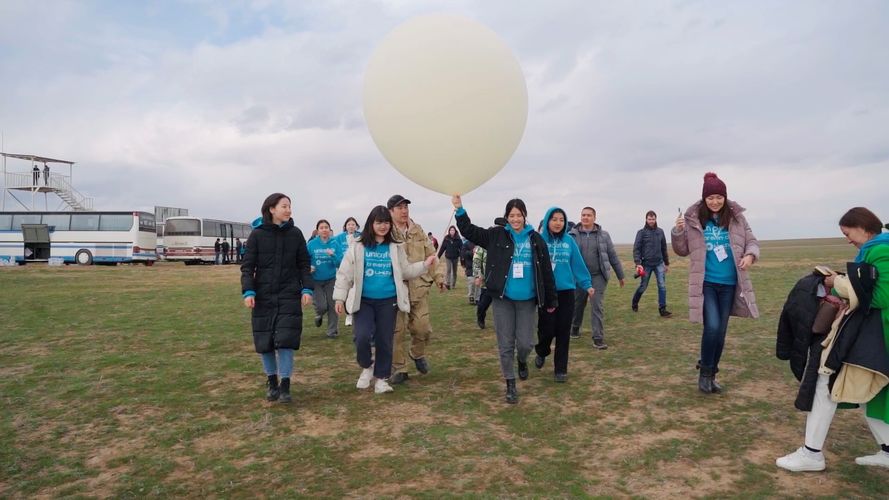
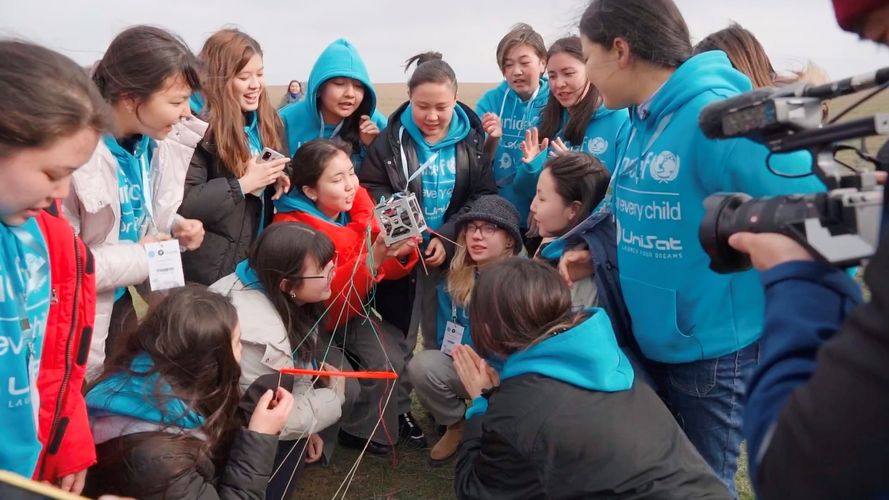
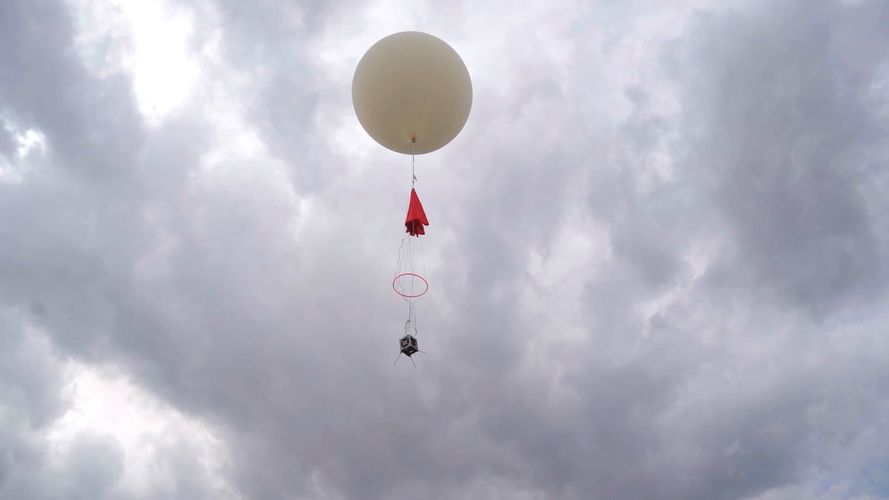
The nanosatellites were created by the girls as part of a 10-day marathon. The project participants mastered the design, engineering, programming and assembly of the spacecraft. They were able to visit the center for space technology and remote sensing. The theoretical knowledge they got was immediately put in practice during the classes. Under the mentors’ guidance, they designed nanosatellite bodies using 3D modeling and printed them on a 3D printer. The girls also programmed UniSat subsystems and tested them in the lab before launch.
«In Kyrgyzstan, only one in three girls aged 15-19 is computer literate, and more than 80 percent of girls choose social and human sciences. But how much do these choices reflect girls’ professional interests and aspirations? That’s why UNICEF launched Girls in Science in 2020 to help them expand their horizons, overcome gender stereotypes, and make their career choices. Every year, more than 10,000 girls join the initiative and more girls gain confidence in developing a career in science. In this context, the nanosatellite launch event is not only the result of two years of work for us, but also an inspiration for the potential of girls and our youth,» Yulia Oleinik, Deputy Representative of UNICEF in Kyrgyzstan, said.
The UniSat program is supported by the Dubai Cares International Education Foundation, Clé de Peau Beauté brand, and a philanthropist Nazanin Alakija.