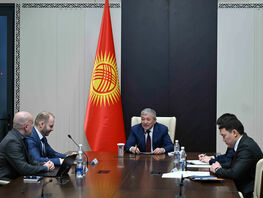


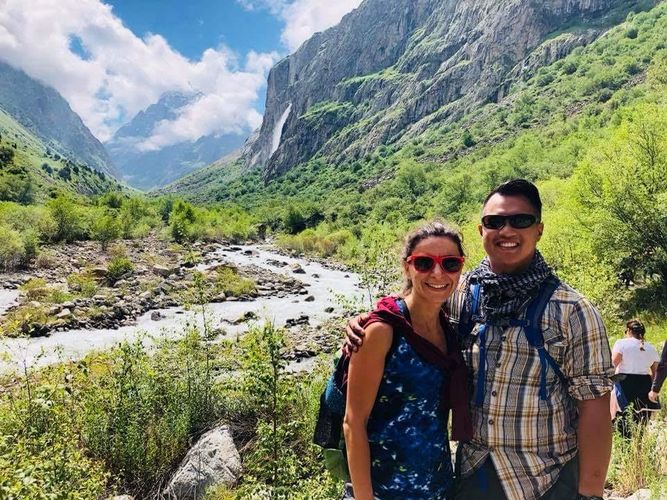
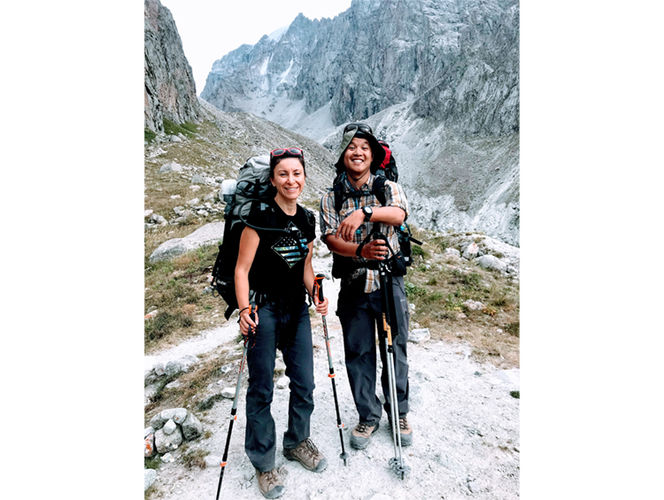
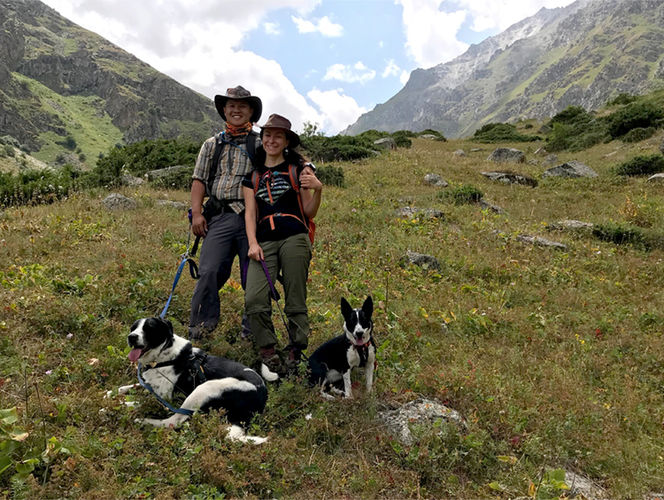
Before an American Gary Shu arrived in Kyrgyzstan, he worked in Georgia, where he met his wife and fell in love with snow-capped mountains.
Gary told that in this former Soviet republic he for the first time lived really close to snow-capped peaks and dangerous altitude, and was absolutely entranced.
«I sought both in my occupation in Kyrgyzstan and was very happy to learn of my assignment,» he said.
— What surprises you in Bishkek and Kyrgyzstan?
— I am surprised by how Bishkek city both is and is not planned and organized! I have a graduate degree in city planning and it is always interesting to see how the best intentions of urban and, in this case, Soviet planners both succeed and fail.
The streets are very arranged in a very orderly manner and parks are spread well throughout the city. But you also can see how the residents of Bishkek would like to use their city — driving in certain lanes, and houses being built up in certain areas.
People will adapt their environment to their needs and desires. Bishkek in this way is just like other planned capitals — Nur-Sultan, Brasilia, Islamabad, and of course Washington, DC — where it is fascinating to see how best laid plans and utopian experiments meet the needs of real residents.
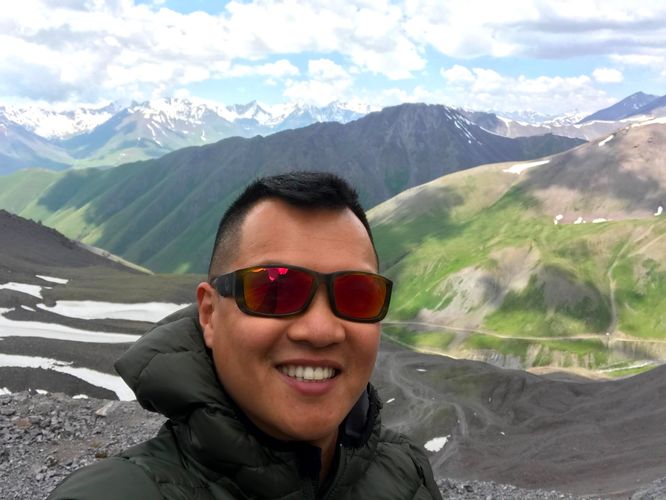
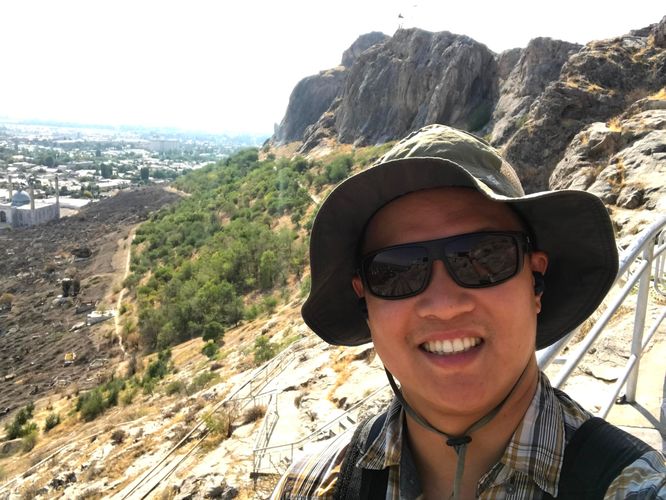
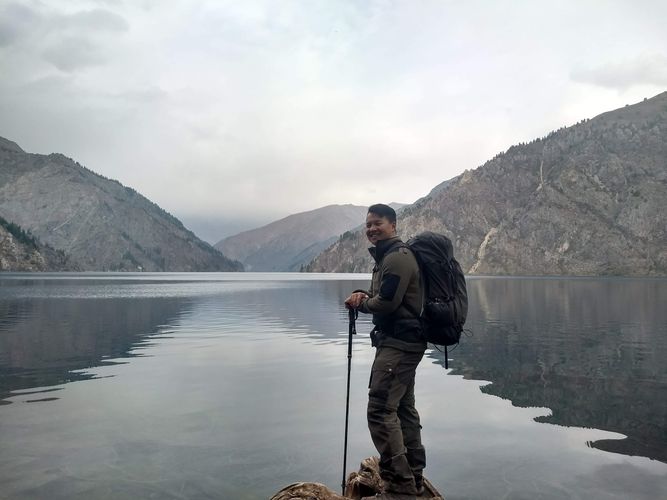
One would think that with all the mountains and valleys that there would be many villages that are very difficult to access and remain remote and isolated. To be sure, there are areas like this, but not as many as I expected.
Gary Shu
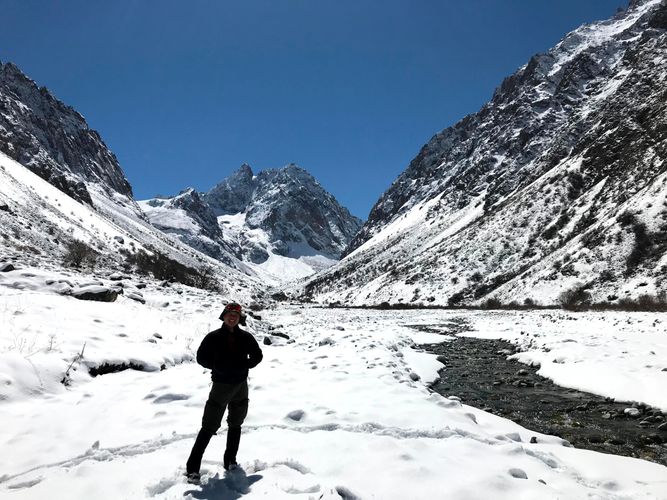
When I visited Kel-Suu in Naryn last March, it was −15 C and we were many hours away from Naryn city, passing Chatyr-Kul and the Chinese border in «no man’s land», but the roads were accessible and residents lived in much greater numbers where I would have considered far, far away on a map. Of course, a traveler needs a jeep to travel all of the different roads, but that is definitely part of the fun for me!
— What in Bishkek reminds you of your hometown?
— I grew up in suburban central New Jersey in the United States, and there is not much that is the same in that small town to Bishkek. I used to live in a home that was right next to farmlands of wheat and soy and if I had to pick one similarity, it is that I also often encounter herds of cattle and goat around my Bishkek residence.
— What do you miss in Bishkek or in Kyrgyzstan?
— I love big, complicated, noisy, and dense cities. I grew up and went to college in New York City, and have also lived in Boston and Washington, DC. I miss the walkable neighborhoods with lots of excitement, stores, cafes, restaurants and people in the streets. Downtown Bishkek along Chui Avenue has some of these amenities, but it is not the same!
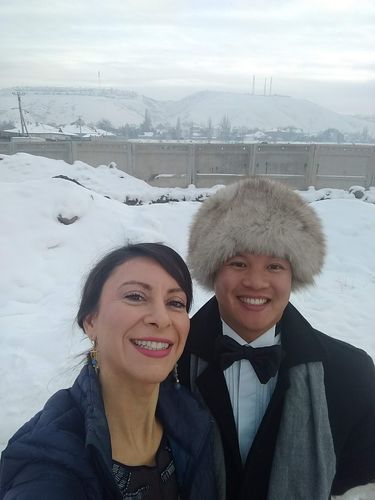
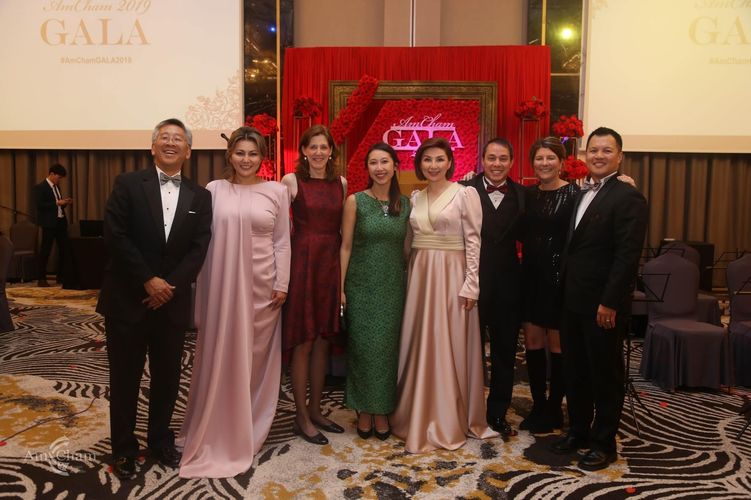
— My wife and I try to watch every ballet performance at the Kyrgyz Opera and Ballet Theater. We have a tradition where we have a drink at the next door Hyatt before each show. Our favorite seats are in the front row, where I can watch the conductor and lean over to take in any of the orchestra soloists. They do not get enough credit for their amazing work! While there are many good ballet companies in the world, I feel that the Kyrgyz ballet company is «ours» — it is a small community and audience that regularly comes together to watch passionate and talented Kyrgyz dancers. The tickets are refreshingly inexpensive, and it has become our go-to weekend event in the winters in Bishkek.
I will always carry with me the memories of ballets that are rarely performed in other countries, like «The Fountain of Bakhchisarai» and «Cholpon.»
Gary Shu
— What national dishes do you like?
— My parents are from Taipei in Taiwan so I grew up with Asian and Chinese food at home. Plov, manty, and lagman all remind me of home, and are all dishes I could eat every single day for every single meal without end.
— What are you afraid to even try?
— I generally think of myself as an adventurous and omnivorous diner. Chalap, kurut, kymyz. However, I did meet one dish that was a «duck» made up of different sausages, vegetables, and meats. Individually it would be palatable, but I was not sure of the mix altogether.
— What has fascinated you in close acquaintance with the local population?
— I am fascinated by the «40 tribes» of the country and the many differences and similarities between people in regions. I find it particularly important to understand the life and culture of people in the south — very hard to do for someone who lives in Bishkek.
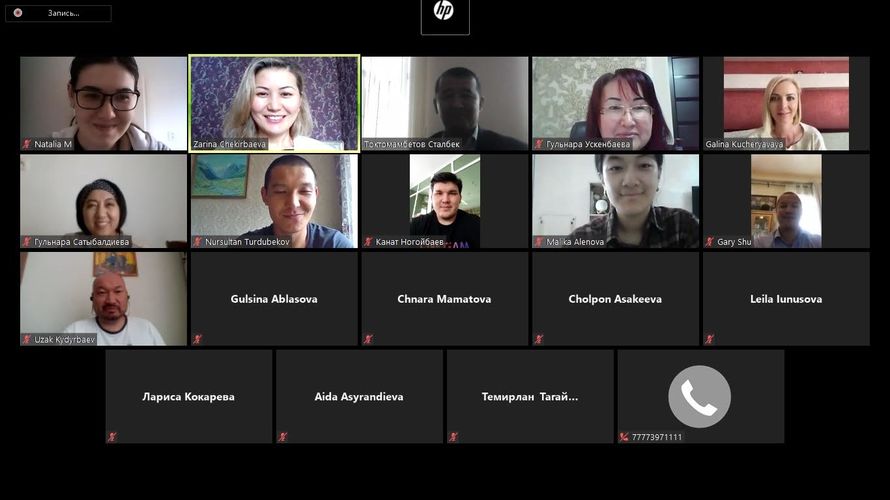
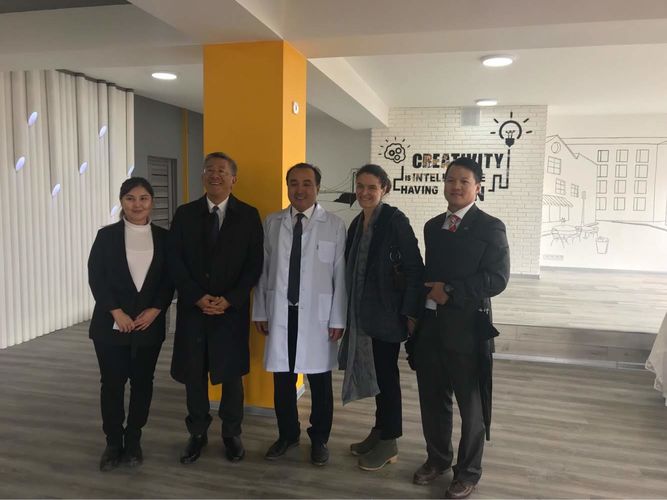
— I am disappointed that I will not get a chance to experience all of the world-class tourist destinations that Kyrgyzstan offers, many of which USAID activities have helped advertise to international tourists. I hold out hope that I will be able to visit tourist sites like Arslanbob and Lenin Peak before other foreigners get there!
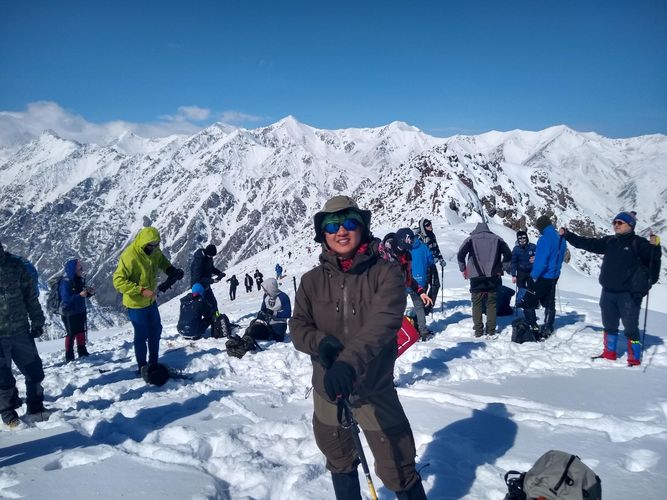
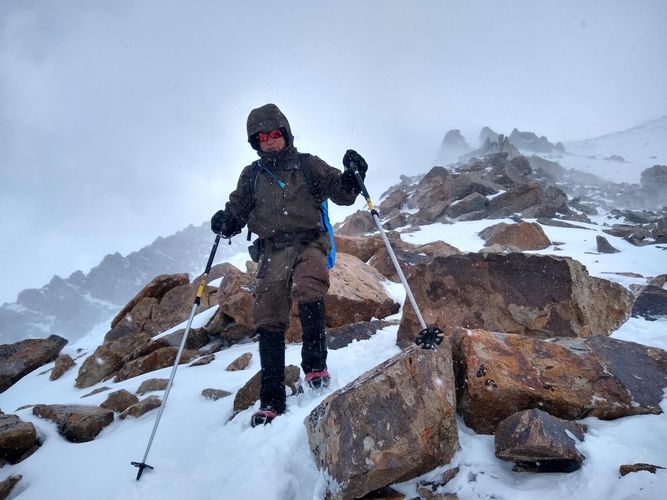
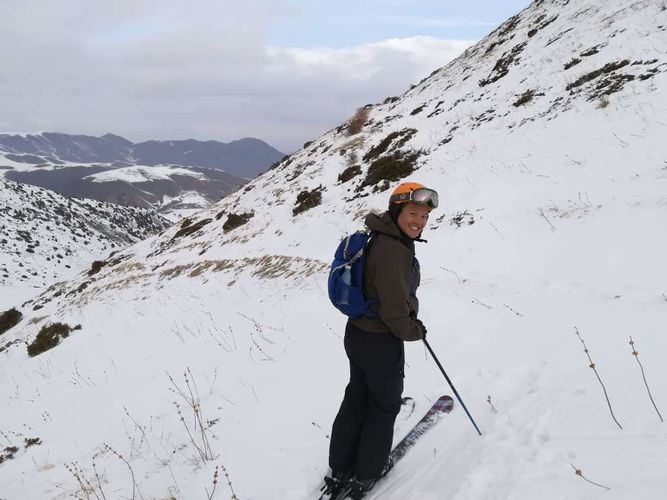
I will definitely miss the friendly people of Kyrgyzstan, but I will most of all remember the world-class mountains and natural environment.
Gary Shu
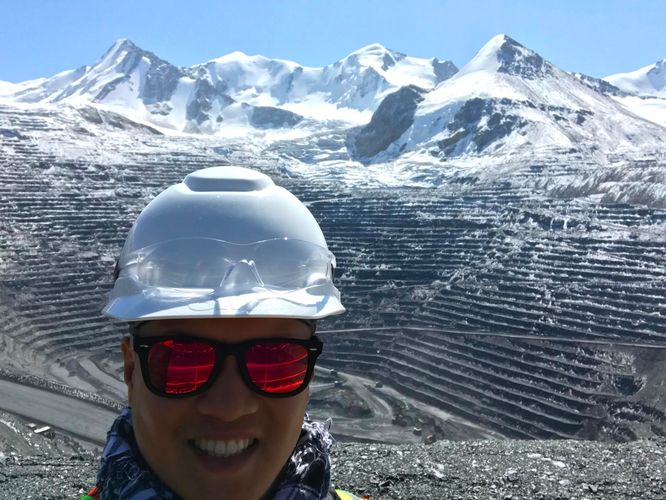
I tried to climb Komsomolets Peak on May Day last year and am sad this year’s Alpiniada will not be celebrated. It took me two tries to get to the top of Uchitel Peak. I also love to ski and tried to ski in as many of the resorts of Kyrgyzstan as possible including villages like Jyrgalan. I became a much better skier by learning the terrain and conditions in places like Jyrgalan, and I will always take those skills and alpine experiences with me for the rest of my life.