

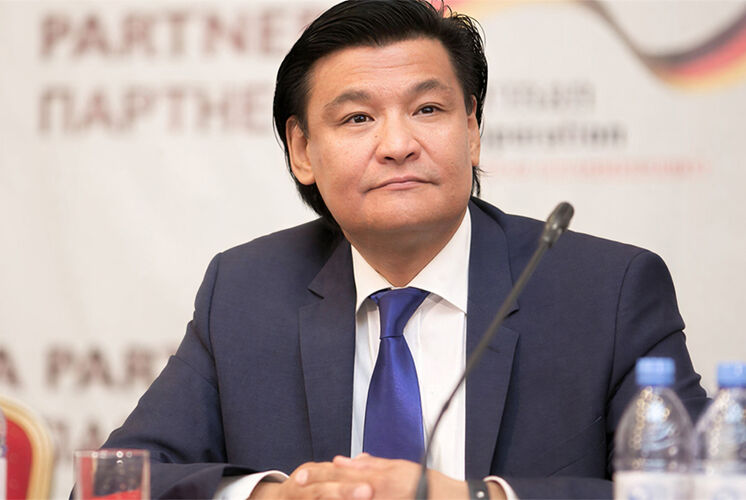
Kyrgyzstan’s energy system is undergoing a deep transformation amid rising demand and deteriorating infrastructure. In an interview with 24.kg news agency, Kubatbek Rakhimov, an expert on infrastructure projects in Central Eurasia and head of Applicata Center for Strategic Solutions, explained why hydropower alone is no longer sufficient, what risks and opportunities nuclear energy presents, and whether the country still has a window of opportunity for a strategic choice.
— Kyrgyzstan introduced a state of emergency in the energy sector until 2026. Is this a sign of crisis?
— No, it is more of a management tool. Today, the energy system operates under conditions of sharply growing demand—driven by both digitalization and demographic changes. The emergency regime allows the Ministry of Energy to make faster decisions, attract investment, and accelerate the modernization of infrastructure, much of which was built in the last century. Electricity imports, meanwhile, are a normal practice. They are a mechanism of regional cooperation that helps manage peak winter loads.
— Why is hydropower, traditionally the backbone of the system, no longer sufficient?
— Hydropower plants remain the foundation, but they depend on seasonality and climate. In winter, when demand is the highest, water availability is lower. This is a systemic issue. That is why diversification is needed—solar and wind generation, and, importantly, a stable source of baseload power that does not depend on natural conditions.
— There is public concern about nuclear energy. How justified are these fears?
— This is largely a legacy of the past. Modern reactors represent a completely different level of safety. We are talking about Generation III+ and IV technologies. For example, the RITM-200N reactor can operate autonomously for up to 72 hours in an emergency without human intervention thanks to passive safety systems.
— How environmentally friendly is nuclear energy?
— In terms of total emissions, it is one of the cleanest energy sources. Its carbon footprint is about 12 grams of CO₂ per kilowatt-hour. For comparison, gas is around 490 grams, and coal exceeds 800. Even solar panels have a higher figure.
— But nuclear power plants are expensive to build.
— Yes, the upfront costs are high. But over a 60-year horizon, nuclear generation becomes one of the cheapest options. Fuel costs are minimal compared to gas or coal.
— Kazakhstan and Uzbekistan are already moving in this direction. Is Kyrgyzstan falling behind?
— Our neighbors have made strategic decisions. Kazakhstan held a referendum, and Uzbekistan has begun construction. Kyrgyzstan is still observing. At the same time, the country cooperates with Rosatom in areas ranging from nuclear medicine to tailings management. However, a decision to build a power plant is still a long way off.
— What format would be realistic for Kyrgyzstan?
— Given the geography, small modular reactors with capacities ranging from 55 to 330 megawatts would be suitable. Several such units could cover a significant share of the baseload deficit. A large nuclear power plant is also possible, but it is a more complex project.
— Can renewable energy replace nuclear power?
— No. It is an important complement, but not a substitute. Solar and wind are intermittent. Without storage systems—which are still expensive—they cannot provide baseload power. Nuclear plants have a capacity factor exceeding 90 percent, while wind operates at 25–35 percent.
— What are the main barriers facing Kyrgyzstan?
— There are three key ones. First is public perception, which can only be changed through open dialogue. Second is the lack of domestic expertise and skilled personnel—this takes time to develop. Third is the choice of a technological partner, which is already a matter of geopolitics and national interest.
— Does the country have time to decide?
— There is a window of opportunity, but it is not infinite. Energy decisions are made for decades ahead. If Kyrgyzstan does not make a choice, it risks remaining a consumer of others’ electricity rather than becoming an independent player.
— So, this is not about urgently building a nuclear power plant?
— Of course not. It is about starting a professional discussion, building expertise, and making a balanced decision. This is a strategic choice that will determine the future of the country’s energy sector.