

The Veterinary, Livestock, Pastures, and Feed Development Service of Kyrgyzstan reminds everyone that meat sold in official markets and retail outlets across the country is safe.
The agency emphasizes that the country has a well-functioning animal identification and tracking system. All cattle, pigs, and horses are required to be registered: they are tagged with ear tags or microchips. All information about the owner, location, vaccinations, and diagnostic tests is entered into a single electronic database.
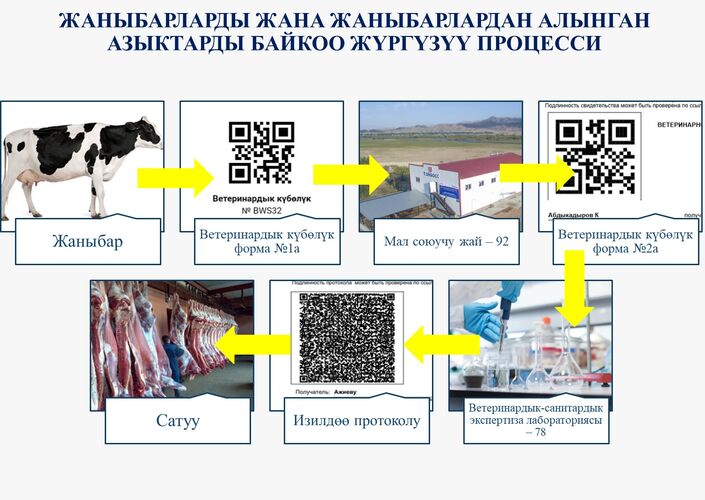
Meat undergoes an additional safety check directly at the markets. In veterinary and sanitary inspection laboratories, specialists conduct a final inspection, after which the carcass is stamped with an oval stamp and issued a test report with a QR code. This document is the primary guarantee of safety for the consumer.
The Veterinary Service urges citizens to be vigilant and purchase meat only from authorized retailers. Buyers have every right to request a test report from the seller and scan the QR code with a smartphone to find out the date and place of slaughter, as well as the test results.
At the same time, experts warn that purchasing meat from unauthorized sources or from private sellers in rural areas, bypassing the animal identification and tracking system, can pose a serious health risk.