


The Ministry of Justice of the Kyrgyz Republic is accelerating the transition to Electronic Notary system. By the end of the year, citizens will be able to perform most legal transactions remotely, eliminating queues and paper-based bureaucracy, the Minister of Justice Ayaz Baetov stated during the project presentation.
The Electronic Notary system has been actively operating since February 1, 2024. During this period, more than 5.6 million notarial acts have been completed across Kyrgyzstan.
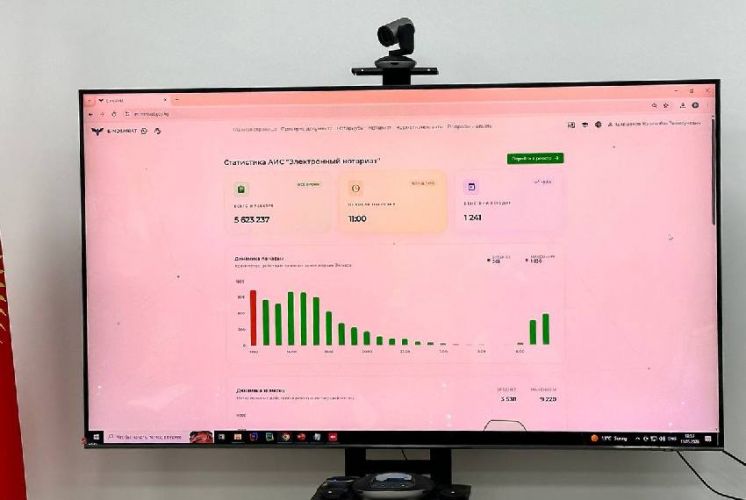
Despite these large figures, the online segment is still developing: currently, only around 2 percent of all notarial services are performed through the web portal or mobile application. Officials attribute this to the relatively recent introduction of remote services and the ongoing adaptation of the population to new digital tools.
However, the Ministry of Justice believes that demand will significantly increase once the number of available online services expands from 6 to 20.
«The main problem in notary offices has always been queues. Previously, there were four offices in Bishkek with 15–16 state notaries, and all of them had huge queues. Today, there is only one state notary office in the capital, and there are no queues. This is the most important indicator. We have addressed the issue through a series of measures across most regions. We are sending specialists laid off in Bishkek and Chui region to remote regions where there is a shortage of private notaries,» the minister said.
Ayaz Baetov emphasized that digitalization of notarial services primarily addresses the critical issue of document security. According to the minister, paper archives in the regions were previously highly vulnerable because documents existed in single copies that could easily be forged, replaced, or lost.
He noted that this situation led to numerous court disputes and criminal cases, undermining trust in legal documents.
«Today, the number of such cases has decreased dozens of times. Neither a notary, nor the Ministry of Justice, nor a party to the transaction can forge a document, because the document is now «in everyone’s hands simultaneously,» the minister noted, explaining that each digital copy is now securely duplicated.
The minister also highlighted the protection of business interests and the stability of contractual relations. While new security protocols—such as video recording and fingerprint verification—may slightly increase processing time, they fully eliminate the risk of future disputes over transactions.
Ayaz Baetov emphasized that additional verification is a small price to pay for the guarantee that no one can abuse their rights and artificially cancel a contract in a few years.
Responding to questions about the time it takes to complete procedures, he stated: «If you have a multimillion-dollar deal, it’s better to spend extra 10 minutes, but then no one will ever dispute it. We’ve introduced video recording and fingerprint verification. Now no one can artificially dispute a contract in two years by abusing their rights.»
In conclusion, Ayaz Baetov outlined the ministry’s strategic goal: making notary services as accessible as possible via mobile devices, making in-person visits to offices unnecessary.
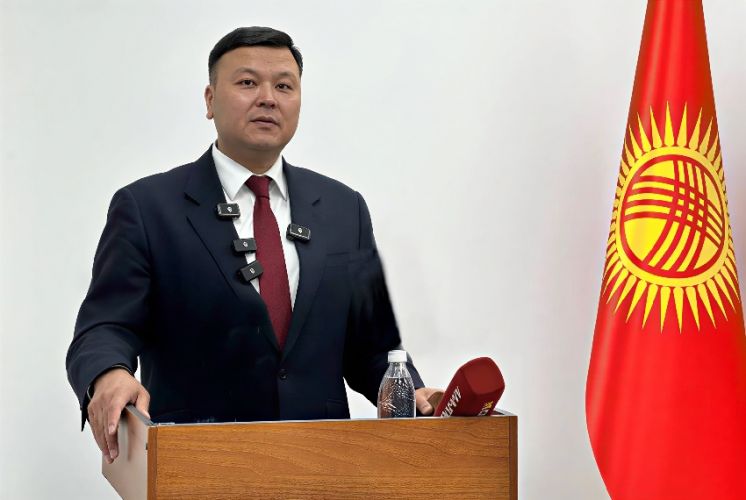
He announced that by the end of the year, 20 of the 27 existing notarial procedures will be transferred to citizens’ smartphones. Speaking about the advantages of new technologies, the minister emphasized that the digital format, introduced in early 2024, makes document forgery virtually impossible.
«Our main step is to ensure everything can be done via phone. In principle, there will be no need to visit a notary in person. Powers of attorney issued since early 2024 are already in digital format. The security of digital documents is a hundred times higher than paper, and we are beginning to accept this as the new norm,» Baetov said.
What is available online today?
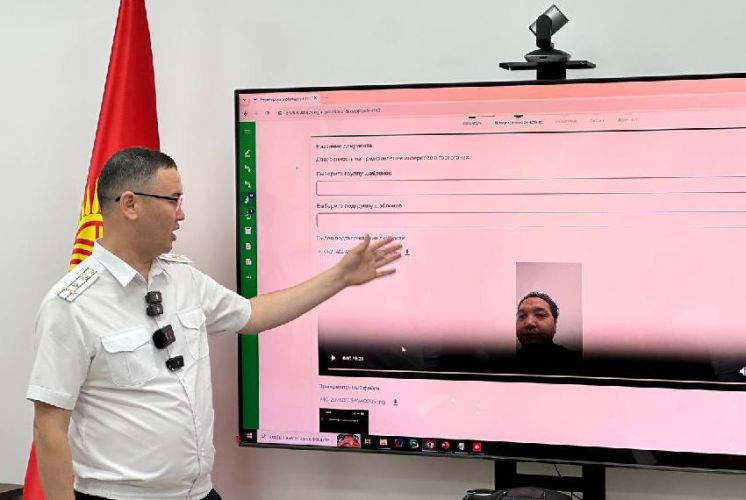
Through the en.minjust.gov.kg portal and E-notariat app (authorization via the Unified Identification System and Tunduk), you can obtain:
- parental consent for a child to travel abroad or obtain documents;
- consent for registration of citizens;
- powers of attorney for the State Transport Agency and for customs clearance (without the right of alienation).
In the coming months, the list will be expanded by 14 additional services, effectively transitioning the country’s notarial system into a fully remote service model.