

In January—February 2026, foreign trade in live animals in the Kyrgyz Republic showed a sharp decline in cattle imports while maintaining an export focus on neighboring markets. Data from the National Statistical Committee say.
Imports: falling demand
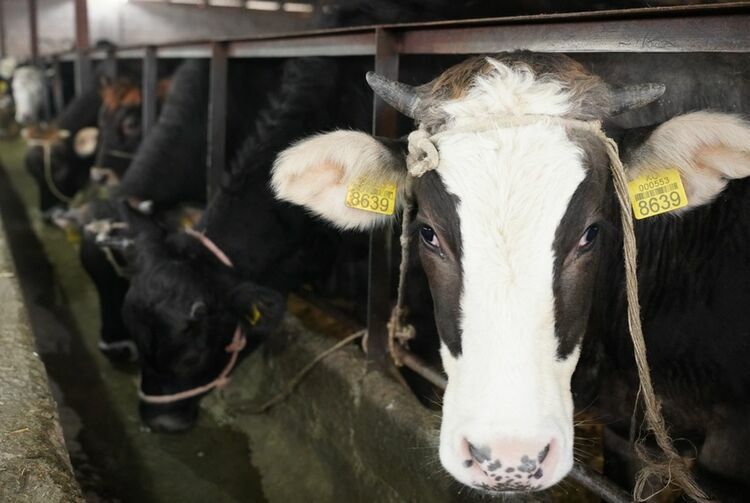
In the first two months of the year, cattle imports dropped to 2,902 heads — just 25.8 percent of the level recorded in the same period of 2025. All imports came from Russia, totaling 70.2 million soms.
Imports of horses, donkeys, and mules also declined to 651 heads (51.9 percent). Key suppliers in this category were:
- Russia — 306 heads;
- Poland — 129 heads;
- Latvia — 30 heads.
The poultry segment remained stable, with 261,800 birds imported for 17.7 million soms. Supplies came from Russia (141,300) and Uzbekistan (120,500).
Exports: focus on Uzbekistan
Kyrgyzstan continues to be a major supplier of livestock to Uzbekistan. Over two months, 6,588 head of cattle were exported there. Although volumes fell to 58.7 percent of last year’s level, the total value reached 134 million soms (about $1.5 million).
At least 165 horses were also exported to Uzbekistan. Notably, while the number of animals increased 2.1 times, the value dropped sharply to 5.5 million soms — just 11.4 percent of last year’s figure.
In the category of other animals, 700 heads were shipped to Kuwait and 15 to the United States. No exports of sheep and goats were recorded during the period, compared to more than 10,000 heads in early 2025.
Restrictions and risks
Since August 2025, Kyrgyzstan has enforced a ban on livestock exports to stabilize domestic meat prices. The Cabinet of Ministers last extended the restriction in early March 2026. Exports are allowed only under quotas issued by the Ministry of Water Resources, Agriculture, and Processing Industry.
In March, Kyrgyzstan also tightened veterinary controls on imports of animals and animal products to prevent the spread of infectious diseases. Monitoring of the epizootic situation has been strengthened in countries reporting outbreaks, including Russia and China.
Meanwhile, Uzbekistan introduced a special control regime in the livestock sector from April 18 to May 18 due to the risk of the spread of a new SAT serotype of foot-and-mouth disease. According to authorities, existing vaccines do not provide full protection against this strain.