

MoveGreen nongovernmental organization, which conducts independent air quality monitoring, has released its annual analytical report covering December 2024 through November 2025.
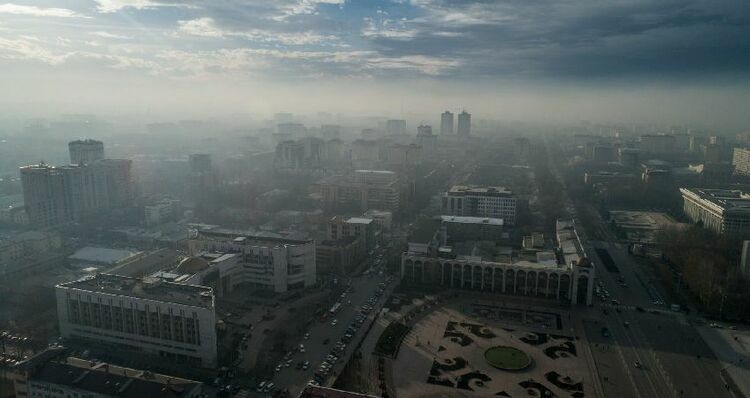
According to the data, air pollution in Kyrgyz cities is highly seasonal and intensifies during the heating period. In Bishkek, about 120 days exceeded air quality standards, with the peak recorded on December 24, 2024, exceeding the government standard by more than 11 times.
The situation in Osh is even more prolonged: out of 336 days, 159 exceeded pollution norms. Unlike the capital, high pollution levels were recorded year-round, with an average annual PM2.5 concentration of approximately 74 micrograms per cubic meter. This is nearly five times the government standard and 15 times the World Health Organization’s recommended limit.
The study also found that building walls do not fully protect residents from outdoor smog during periods of high concentration. Indoor air exceeded safe levels on 58 days.
To address the issue, MoveGreen recommends developing green energy, clean public transport, urban greening, and extending air quality monitoring with open access to data.
Experts note that air quality depends not only on PM2.5 levels. During warm months, nitrogen oxides (NOx) and formaldehyde (CH2O) also exceed safe concentrations, posing serious health risks.
Therefore, one of the key steps to improving air quality is expanding the comprehensive monitoring system:
- Installing sensors to track various pollutants;
- Increasing sensor density in Bishkek and Osh;
- Expanding monitoring beyond major cities;
- Collecting and publishing data in an open-access format.
According to the World Bank and MoveGreen recommendations, the public sector should take a number of comprehensive measures to improve the situation.
In energy sector:
- implementing energy-efficient solutions to reduce coal consumption;
- stimulating the transition to green energy for heating residential buildings;
- installing high-efficiency filters to capture PM2.5 particles at boiler houses and industrial facilities.
In transport:
- funding environmentally friendly transport;
- increasing the attractiveness of public transport, including by reducing passenger travel times (dedicated lanes);
- introducing vehicle inspections.
In greening:
- combatting road and soil dust within the city (planting greenery instead of open ground, repairing roads and sidewalks);
- comprehensive multi-level greening (grass-bushes-trees), vertical greening of facades, and modernization of the irrigation system.
In air quality management:
- improving the regulatory framework and coordination across vertical and horizontal lines of power;
- implementing public accountability and providing open access to air quality data;
- supporting the development of civic air quality monitoring in Kyrgyzstan.
- jointly combat transboundary air pollution with other Central Asian countries.
PM2.5 is tiny air particles up to 2.5 micrometers in diameter that can penetrate deep into the lungs and bloodstream, posing a serious threat to human health.