
Young Bishkek designer wins award at International Postober Festival
Ksenia Sim, a 16-year-old student at Compass College in Bishkek, received the Algimantas Vidugiris Recognition international award for an original poster inspired by The Tale of a Man, a Wheel and a Plane Tree, a film by Kyrgyz director Algimantas Vidugiris. The award ceremony was held recently as part of the International Poster Art Festival Postober.
The festival brings together designers from around the world. This year, hundreds of artists submitted works in the field of poster art. An international jury selected the best entries for inclusion in the festival’s annual catalogue.
A special part of the program was the presentation of the Algimantas Vidugiris Recognition award. One of the competition categories focused on original posters themed around “The Films of Algimantas Vidugiris and the Collage Avant-Garde.” More than 50 works inspired by the director’s cinematic legacy were submitted.
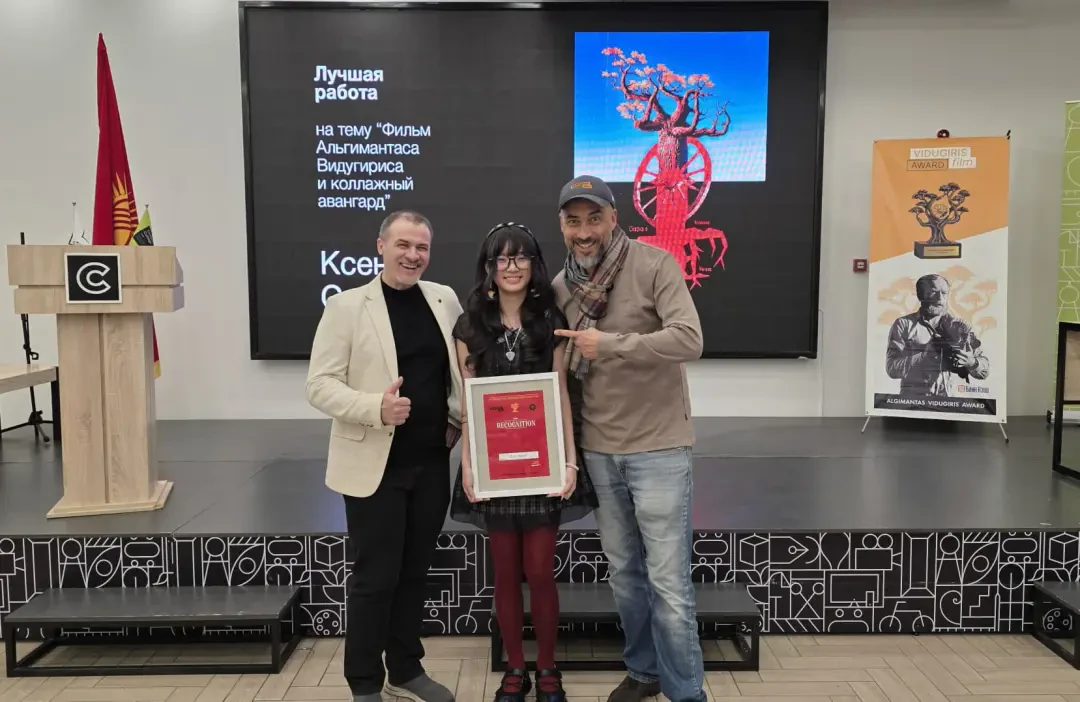
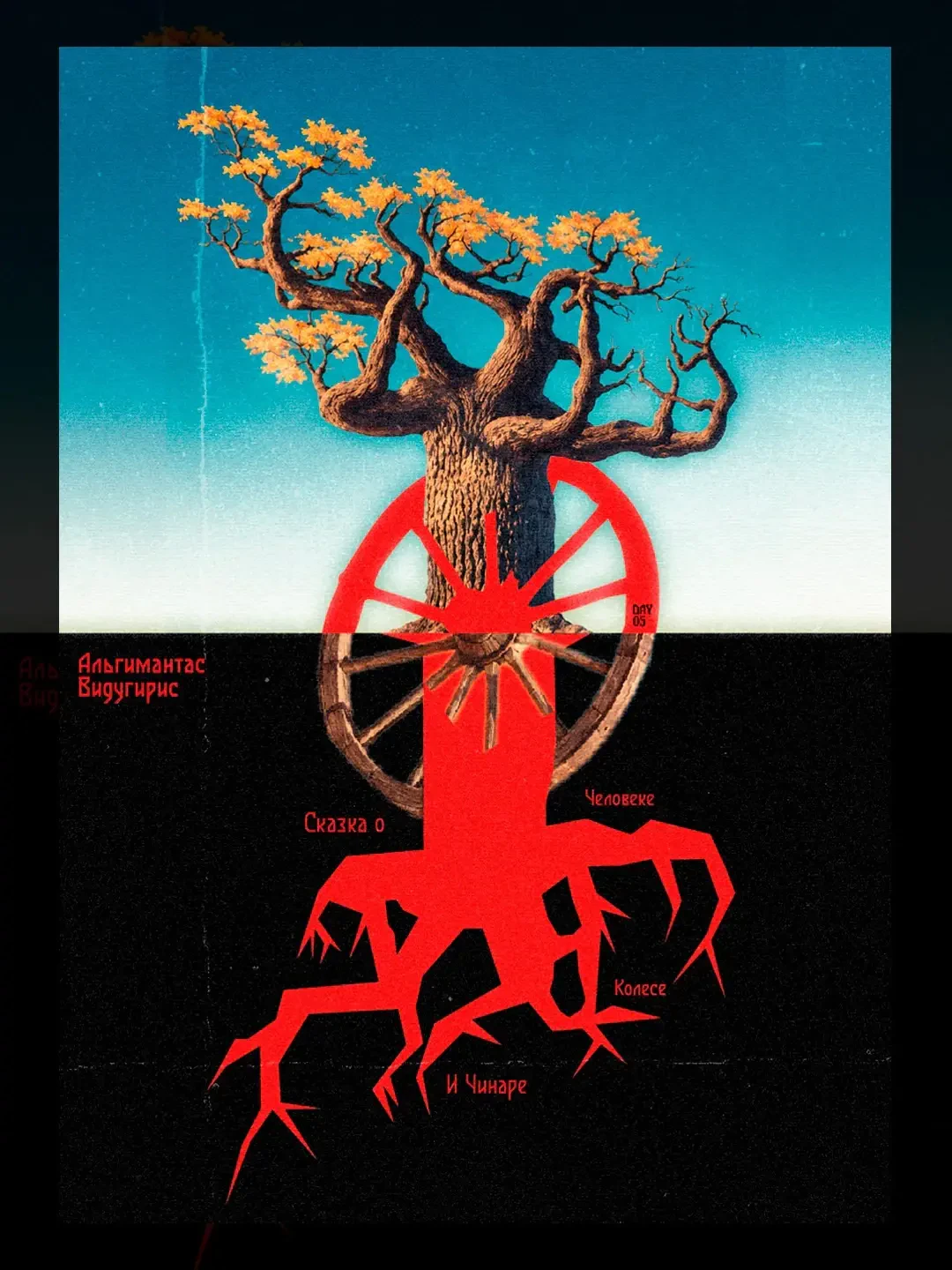
The winner was Ksenia Sim, a second-year graphic design student at Compass College. She chose The Tale of a Man, a Wheel and a Plane Tree, filmed at the Kyrgyzfilm studio in 1973–1974, as the subject of her poster.
For the 16-year-old, the award marks the first major recognition of her creative work. Sim said she was both surprised and delighted by the win.
“I was deeply impressed by Algimantas Vidugiris’s work, especially the film The Tale of a Man, a Wheel and a Plane Tree. I really liked its composition, so I decided to use this particular film as the basis for my poster and convey my feelings about it,” she said.
The Tale of a Man, a Wheel and a Plane Tree is a philosophical parable in which Vidugiris reflects on human life, social relationships and the eternal pursuit of happiness.
The characters are constantly occupied with everyday concerns and try to catch up with their “wheel of happiness”, but never manage to achieve what they seek. Through satirical and allegorical imagery, the film director explores social contradictions, human greed and the absurdity of familiar social roles. The film was banned from screening and remained shelved for many years.
It was not until 1987, during the period of perestroika, that the film was cleared for public screening. In March 1989, it was broadcast on the Soviet Central Television in a program “Visiting a Fairy Tale”.
Today, the film is attracting renewed interest from a new generation of young artists and designers. Its story has found a continuation in contemporary poster art, demonstrating that ideas and artistic imagery can transcend time and resonate with audiences decades later.
Sim’s work is therefore not only a creative interpretation of the film but also a bridge between the legacy of Kyrgyz cinema and contemporary art.


