
Bishkek’s least accessible district for people with disabilities identified
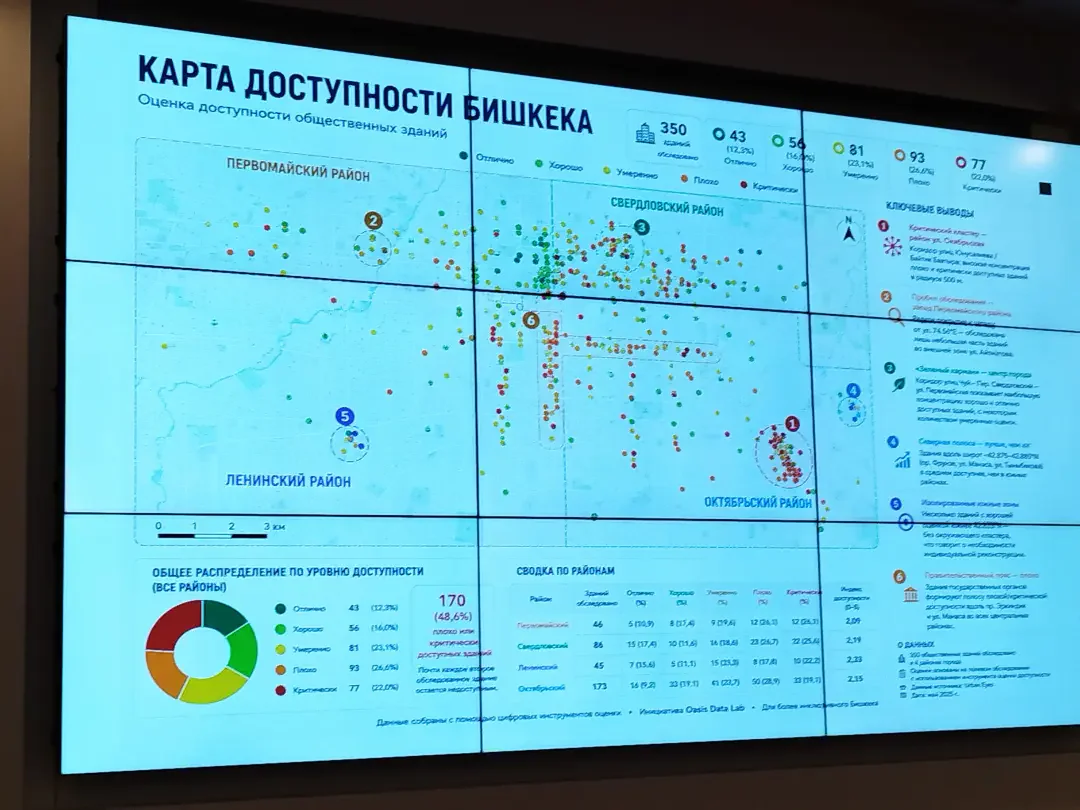
People with disabilities have assessed the accessibility of 350 public buildings in Bishkek, and the findings have formed the basis of the city’s first inclusive accessibility map. Mashkhura Sinavbarova, a representative of Oasis Foundation, announced at a roundtable.
According to her, the audit was conducted from 2024 to 2026.
The findings showed that only 40 percent of the buildings have entrances wide enough to accommodate a wheelchair. While 52 percent have ramps, their quality remains a major concern.
"We identified a pattern: the chance of completing an entire route without assistance is only around 2 percent. In 98 out of 100 cases, wheelchair users entering a multi-storey public building in Bishkek will encounter at least one insurmountable barrier on their way to accessing a service. This could be the absence of tactile paving, a ramp or Braille signage," Sinavbarova said.
She added that the assessment covered five criteria: ramps, doorway width, the availability of a lift, an accessible toilet and an emergency assistance call button.
The average accessibility score for the 350 buildings was 2.19 out of 5.
"We set the threshold at 3, which means accessibility in Bishkek is low. Around 70 percent of the buildings, or more than 200, fall below that threshold. Sixty percent do not even have a functional entrance. Of the 350 buildings, 77 are in critical condition, with none of the accessibility features that should be considered when constructing buildings. Only 13 buildings achieved excellent results. These are usually shopping centres, which aim to attract as many visitors as possible,” Sinavbarova noted.
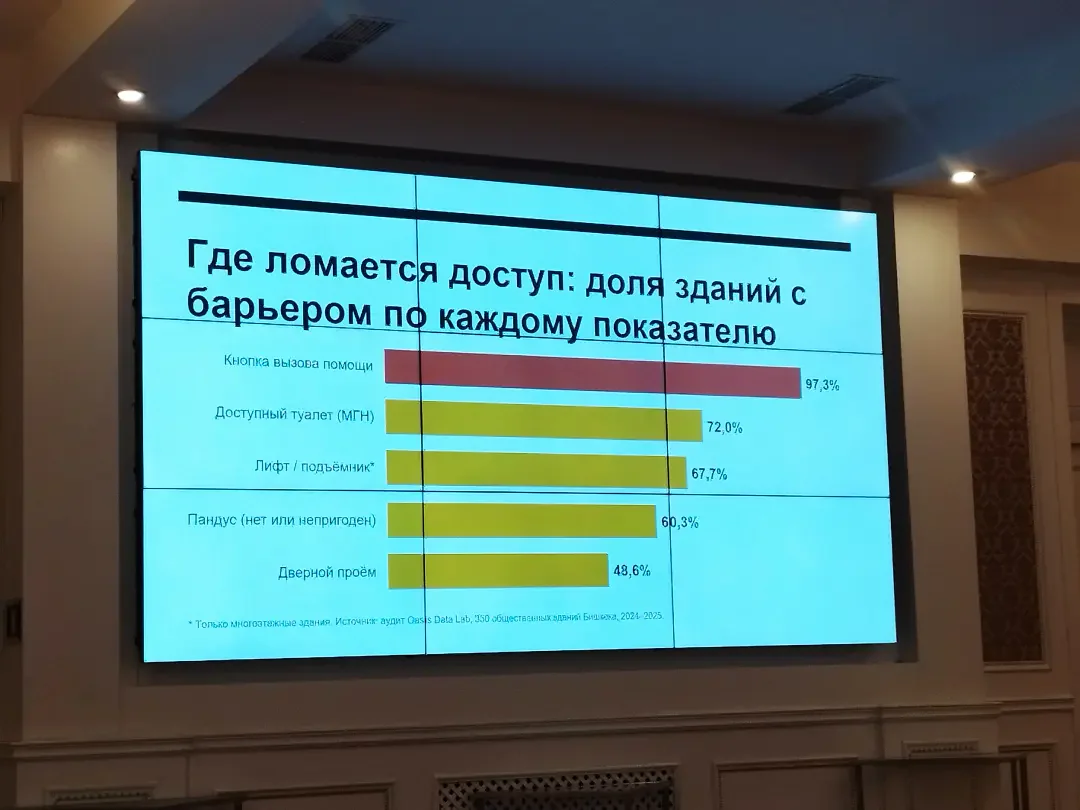
She said that even when accessible toilets are available, they are often being used for other purposes or are out of order. Lifts are also absent from many buildings, particularly those dating back to the Soviet era. Emergency call buttons are almost entirely lacking.
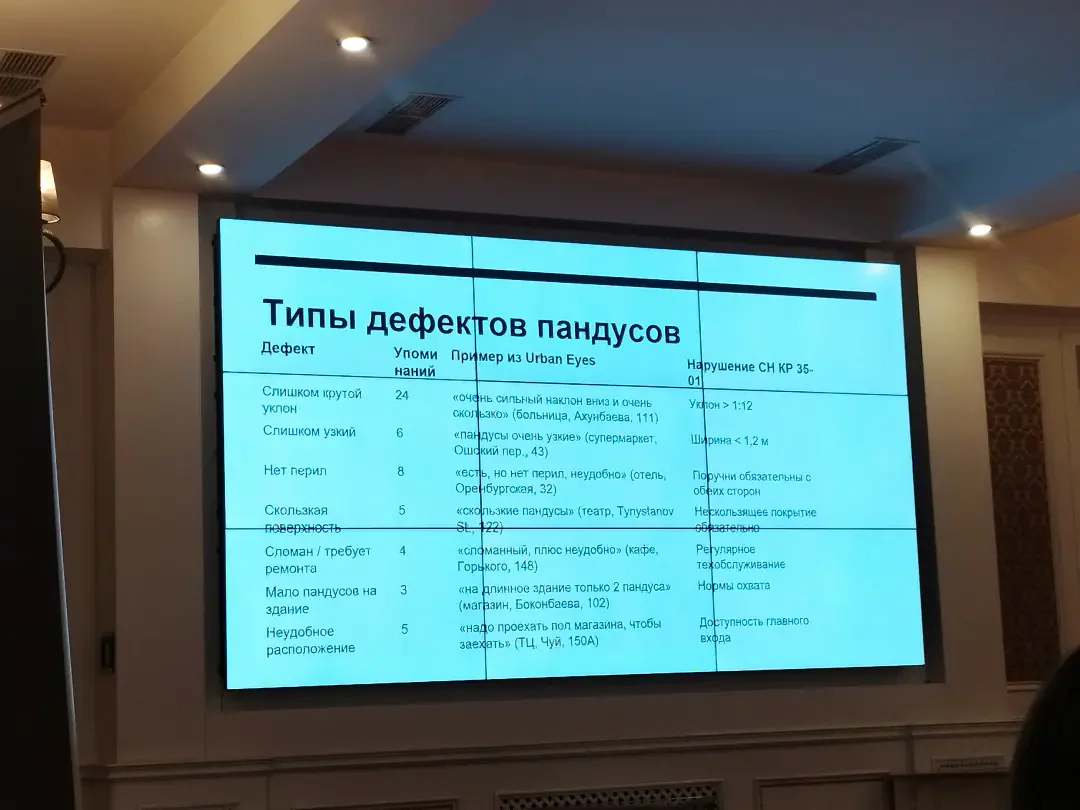
Sinavbarova added that ramp standards are frequently ignored. Ramps may be too steep, have slippery surfaces or no handrails, or lead directly to stairs.
The best ramps were found in cinemas and museums, where renovations have been carried out.
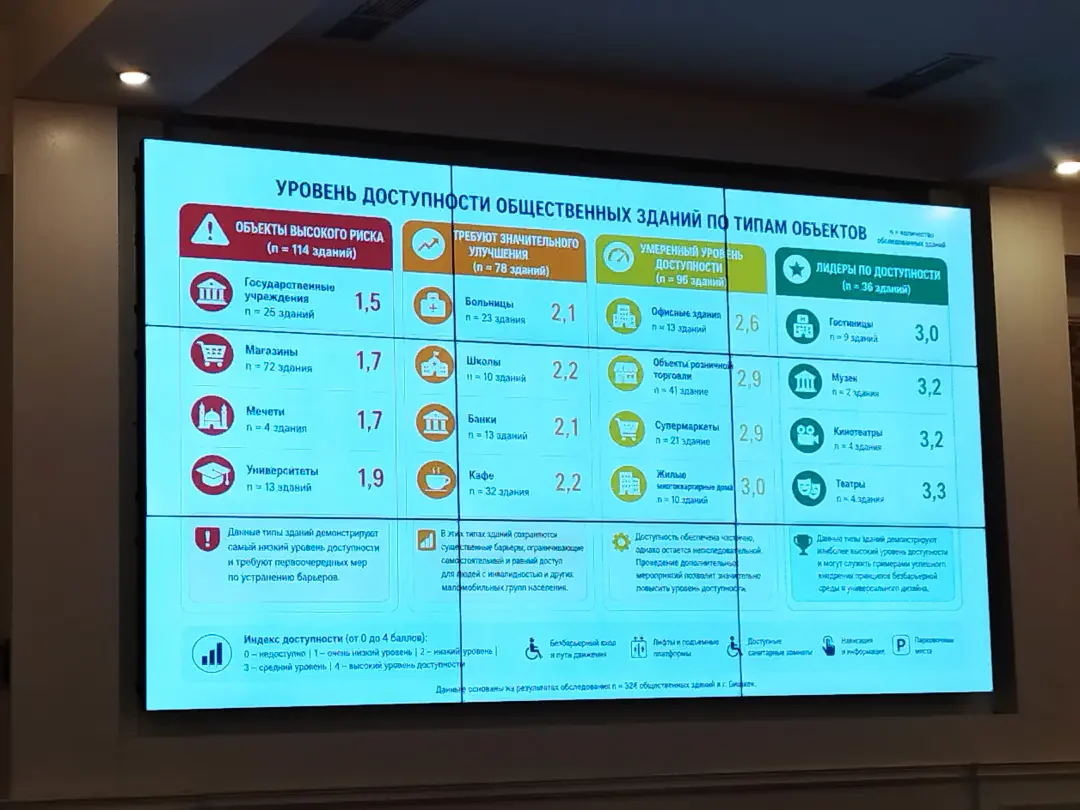
"High-risk facilities include government institutions, universities and shops. Hospitals, schools, cafes and banks require significant improvements. Hotels, theaters, cinemas and museums lead in accessibility,” she said.
According to Bishkek’s accessibility map, Pervomaisky district has the highest accessibility rating, followed by Sverdlovsky district, which has hotels, shopping centers and renovated buildings.
Oktyabrsky district ranks last. «This is the most surprising finding. Huge residential developments are being built there, yet people continue to send us information showing that buildings fail to meet accessibility standards, ” Mashkhura Sinavbarova said.
The map will help people with disabilities check whether facilities are accessible in advance and plan their journeys accordingly.


