
From green paradise to desert: Bishkek Botanical Garden torn up and sunburned
A video posted on social media by user Rashid Braun has gained tens of thousands of views and sparked public outrage. The footage contrasts two videos of the same Botanical Garden in southern Bishkek, filmed a year apart: May 2024 and July 2025.
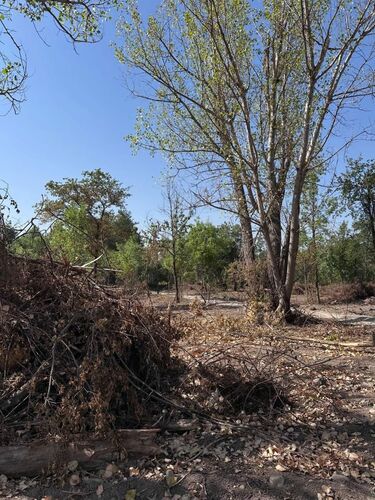
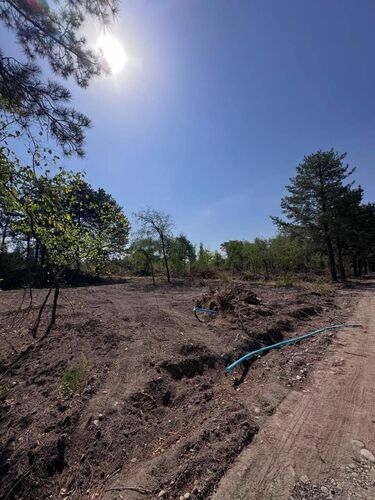
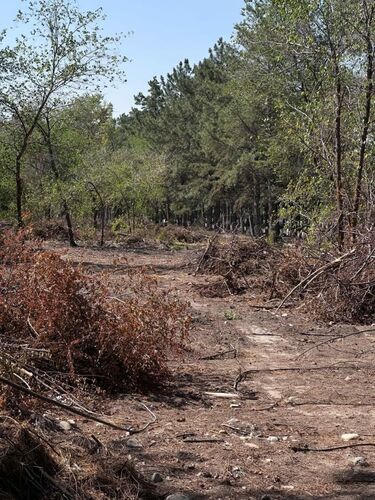
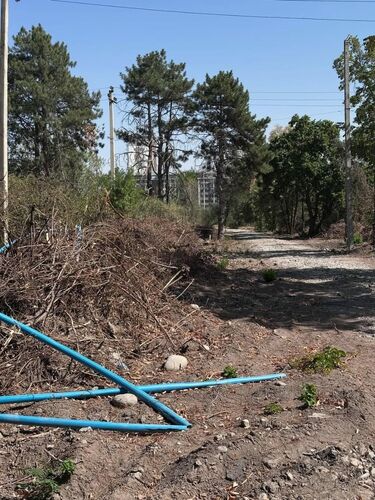
The first video (May 26, 2024) shows a lush spring landscape—trees, shrubs, and blooming lawns, the garden’s familiar image as the «lungs of the capital.» The second video (July 25, 2025) reveals a drastically changed scene: parched ground, cut-down trees, and visible traces of bulldozers and dismantling. Comments online read: «This is a monstrous crime against nature... against the city and its residents... it must not go unpunished!»
It is important to note that the two videos were shot in different seasons—spring 2024 versus summer 2025—during an extreme heatwave, when city services reportedly struggled to maintain irrigation. This intensified the visual contrast between the «greenery» and the «wasteland».
Witnesses and photos show the Botanical Garden, once a popular green recreational area, now in alarming condition: toppled and broken trees, scorched lawns, scattered debris, and construction remnants.
Local authorities claim that the ongoing reconstruction is aimed at clearing the area of an invasive weed species that had overtaken much of the land, crowding out cultivated plants. For decades, no funding had been allocated to address this issue; only this year—after 30 years — resources have been provided for a comprehensive renovation, including the removal of unwanted vegetation and the installation of new infrastructure. Officials stress that the clearing is part of this effort.
Adding to the public anger, Bishkek City Hall stated that the Botanical Garden is not under municipal management but is instead administered by the National Academy of Sciences, suggesting that complaints should be directed there. Basically, the city distanced itself from responsibility for one of Bishkek’s largest and oldest green zones.
Despite this, residents remain convinced that the reconstruction has already inflicted serious ecological damage: «No one is trying to save the remaining trees anymore,» posts in local social media groups read.
Public concern remains high, with many demanding clearer, more transparent explanations for what is happening to such a historically and environmentally significant site.
The Enver Gareev Botanical Garden is the largest scientific and natural complex in Kyrgyzstan. Established in 1938, it spans over 100 hectares in southern part of Bishkek. It was created as a research base for studying Central Asian flora and acclimatizing rare, ornamental, and fruit-bearing plants. The garden has housed thousands of species from around the world, playing a key role in the capital’s greenery, scientific research, public recreation, and environmental education.


