
Road across permafrost: How Barskoon–Bedel road is being built
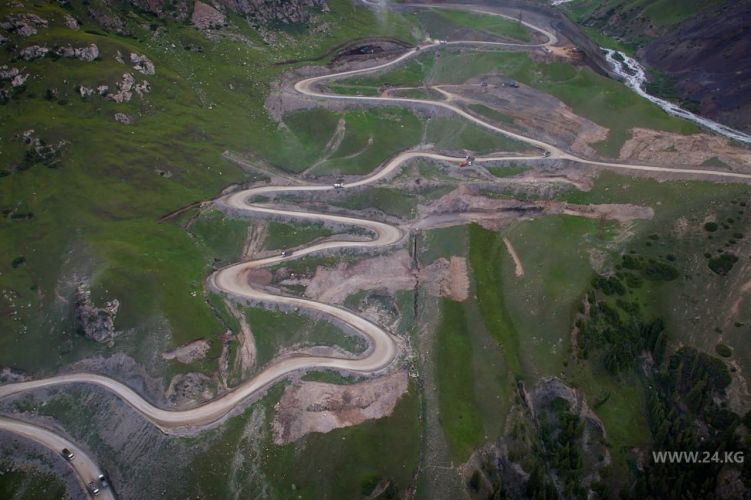
The construction of Barskoon—Bedel road is taking place in what road builders describe as extreme conditions: elevations of more than 4,000 meters, permafrost, glaciers, avalanche-prone areas, complex geology and a short construction season.The total length of the project is about 161 kilometers, with approximately 110 kilometers of the road located above 3,000 meters above sea level.
24.kg news agency spoke with Hou Huxiang, head of the Office of China Road and Bridge Corporation (CRBC) in the Kyrgyz Republic, which is involved in the project, about the most challenging sections of the route, construction technologies used on permafrost, the excavation of high-altitude tunnels, and the importance of the new road for Kyrgyzstan.
— When your team first arrived at the future Barskoon—Bedel route, what made the strongest impression on you?
— On the one hand, we were impressed by the majestic yet extremely harsh nature of the area. On the other, we immediately saw how much people need a safe and reliable transport corridor.
The route passes through high mountains, glaciers, permafrost zones, steep slopes and deep river valleys. There are also avalanches, landslides and seasonal ground thawing. For engineers, this is an extremely challenging project.
But we especially remember our first trip to Karasai River.
The old bridge had been washed away by a flood, forcing local residents to cross the river directly in their vehicles. The water was fast and extremely cold, and cars would get stuck in the middle of the riverbed. We encountered the same problem ourselves.
At that moment, we realized that for a builder, it might simply be a bridge or several kilometers of road, but for local residents it means being able to get home safely, send their children to school, transport agricultural products and take someone to a hospital. It is a completely different level of responsibility.
— The road runs across permafrost. How do you prevent the roadbed from subsiding or cracking in a few years?
— This is one of the project’s key engineering challenges. The road’s average elevation is about 3,300 meters, while the highest point reaches 4,028 meters. Approximately 110 kilometers of the route are located above 3,000 meters.
The main problem with permafrost is the freeze-thaw cycle. If the ground begins to thaw unevenly, the roadbed can subside, leading to cracks and deformation.
That is why detailed geological surveys are conducted first.
Depending on the thickness of the permafrost and its ice content, thermal insulation panels, ventilation pipes and other engineering solutions are used. These measures are designed to reduce heat transfer to the road foundation and keep the ground frozen.
In some sections, prestressed tubular piles will be used. They help increase the load-bearing capacity of the foundation. In addition, deformation is continuously monitored during construction.
— Which structures along the route do you consider the most challenging?
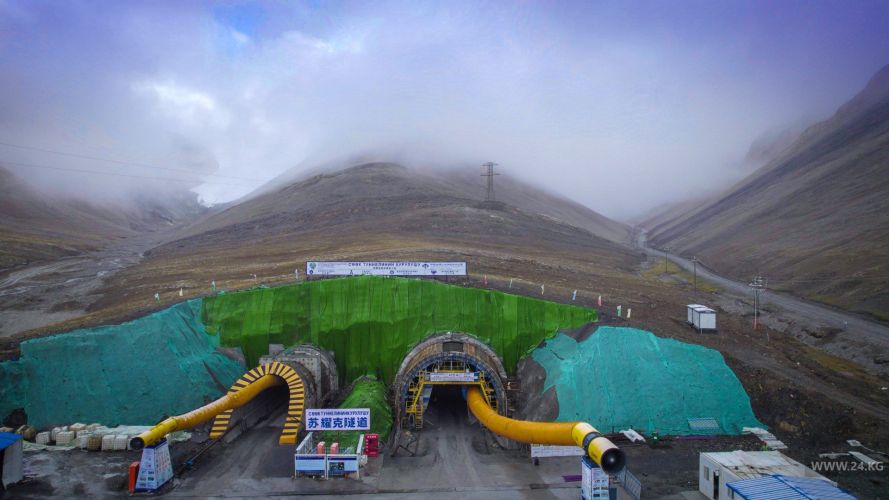
— First of all, the Sook and Ashuu-Suu tunnels. The Sook tunnel is located at an elevation of approximately 3,800 meters, and its main section is 5.3 kilometers long. The Ashuu-Suu tunnel is located at about 3,500 meters, and its length is 3.8 kilometers.
These are both high-altitude and very long tunnels. At such elevations, the efficiency of machinery and workers decreases, while ventilation, protection of tunnel portals from freezing and organizing work in extremely cold conditions become more challenging.
— What solutions are being used to build these tunnels?
— Work is being carried out in several areas. We are exploring options for accelerated drilling and blasting in high-altitude conditions, new thermal insulation and drainage technologies around the tunnel portals, as well as methods for monitoring large rock deformations.
Another area is an early warning system for hazardous geological processes in deep, water-saturated fault zones.
— Does this mean the initial design may be changed during construction?
— Yes. In conditions like these, you cannot simply draw up a design once and treat it as final.
Our approach is to conduct a detailed survey first, then design, followed by continuous verification during construction and adjustments where necessary.
For example, the extent of permafrost is determined more precisely directly on-site. During tunnel excavation, the condition of the surrounding rock is additionally assessed. If the actual geology differs from the initial forecast, reinforcement and protection methods are modified accordingly.
— How strict is quality control on a road construction project like this?
— Meeting minimum regulatory standards is simply not enough here. It is necessary to consider how the structures will perform decades from now under continuous freeze-thaw cycles.
Particular attention is paid to monitoring subgrade settlement of the roadbed, low-temperature cracking of the pavement, frost heaving inside tunnels, the stability of bridge foundations and the performance of drainage systems.
For key construction processes, a test section is completed first. Once the technology has been tested, it is applied to other sections. Laboratories are involved, and monitoring is carried out directly at the construction sites.
If a geological anomaly is detected or signs of problems related to ground freezing or thawing emerge, work must be suspended until the situation is reassessed and the solution is adjusted.
— How is construction currently progressing?
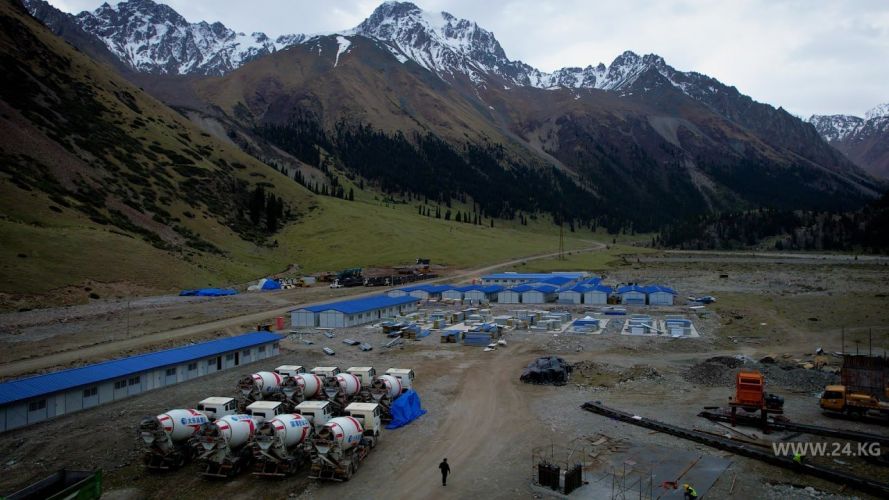
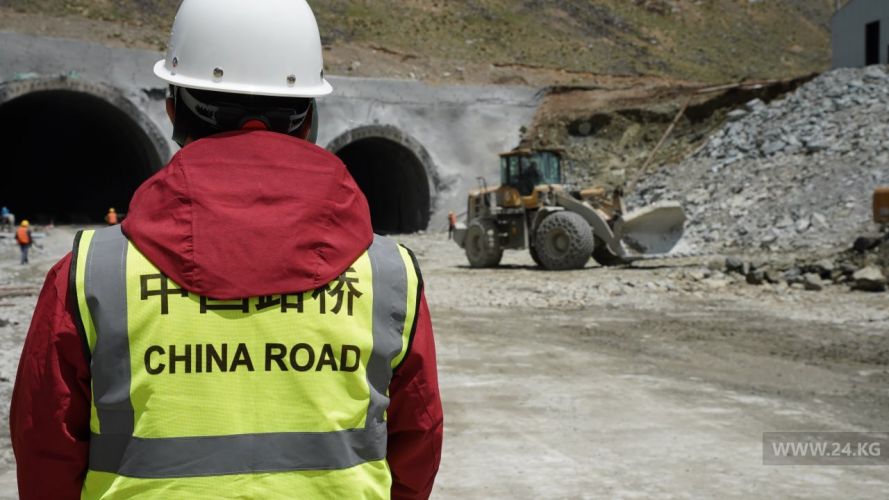
— Work is underway on the roadbed, bridges, culverts and tunnels.
The project includes a total of 50 bridges. At the time these figures were prepared, their overall completion rate was estimated at 21.13 percent. The project also includes 248 culverts, with a completion rate of 29.83 percent.
The entire project is scheduled for completion and the road is expected to open to traffic in 2030.
The next stage will include, among other things, construction of the high pier of bridge K6. It will be approximately 80 meters high. The first prestressed tubular pile will also be installed in the permafrost section, while two tunnels will be prepared for the first winter construction season.
— Why is this road so important for China and Kyrgyzstan?
— Its significance goes far beyond that of a single road. First and foremost, it will provide a new transport link between Kyrgyzstan and China. It is expected to strengthen the resilience of cross-border logistics, reduce transportation times and lower transport-related risks.
For Kyrgyzstan, the road will also create additional opportunities for the regions along the route, including the transportation of agricultural products, development of livestock farming and tourism.
In a broader context, it is part of the Central Asian transport network and has the potential to strengthen links between regional production chains and supply routes.
— A construction project of this scale inevitably affects the lives of local residents. How are you building relationships with them?
— It’s important for us not to limit ourselves to just the construction site. Chinese and Kyrgyz employees celebrated Nooruz together and took part in greening campaigns in Issyk-Kul region. Ahead of International Children’s Day, the project team visited schools and villages in the Barskoon area, where they distributed school supplies and gifts to children.
We want this cooperation to be reflected not just in the kilometers of road built, but in the ordinary human relationships between people who work and live side by side.
Hou Huxiang
— What would you like to see as the result of this work once the road opens?
— It is important to us that the Barskoon—Bedel road becomes more than just a new road. It should provide people with a safe passage, improve access to villages and pastures, and create additional opportunities for tourism, trade and international logistics.
Ultimately, the value of a project like this is determined not only by the complexity of its tunnels, bridges and engineering solutions, but by the extent to which the infrastructure transforms people’s lives.
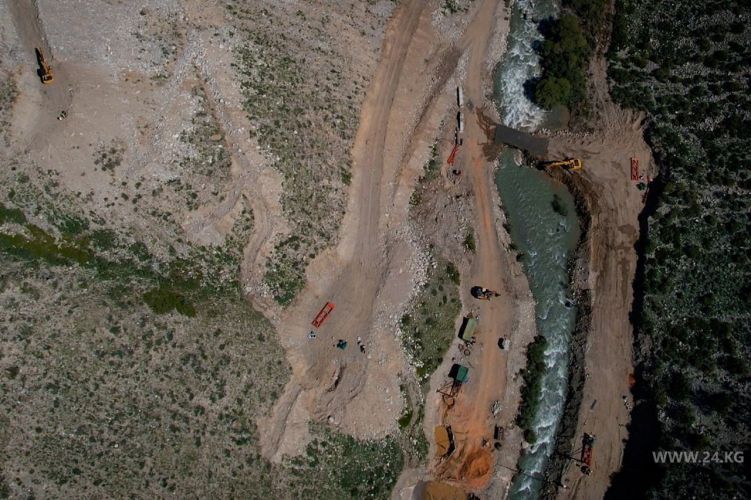
The Barskoon—Bedel road is one of Kyrgyzstan’s largest infrastructure projects, designed to create a new transportation corridor toward the border with China.
The project’s customer is the Ministry of Transport and Communications of the Kyrgyz Republic. The general contractor is China Road and Bridge Corporation (CRBC).
The road will be approximately 161 kilometers long. It will run predominantly through high-altitude terrain, with a significant part of the route located above 3,000 meters above sea level.
Construction officially began on August 27, 2025. The project is scheduled to be fully completed and the road commissioned in 2030. Under the government timeline, project execution spans from Q1 2026 through Q4 2030.
The project includes the construction of 50 bridges and two major tunnels. The tunnel beneath the Sook Pass will be approximately 5.3 kilometers long, while the Ashuu-Suu tunnel will be about 3.8 kilometers long.
Once completed, the road is expected to provide more reliable year-round connectivity along this route, expand Kyrgyzstan’s transit capacity and create an additional transport link to China.


