
Central Asia to create online catalogue of climate risks and mudflow hazards
A regional dialogue has started in Bishkek aimed at harmonizing policies and developing unified digital tools to coordinate efforts among Central Asian countries in addressing climate-related threats.
The meeting is held within the framework of the Restoring Sustainable Landscapes in Central Asia (RESILAND CA+) program, supported by the World Bank. Experts, hydrologists, cartographers, and representatives of relevant ministries are discussing joint measures to reduce risks of mudslides, floods, and land degradation.
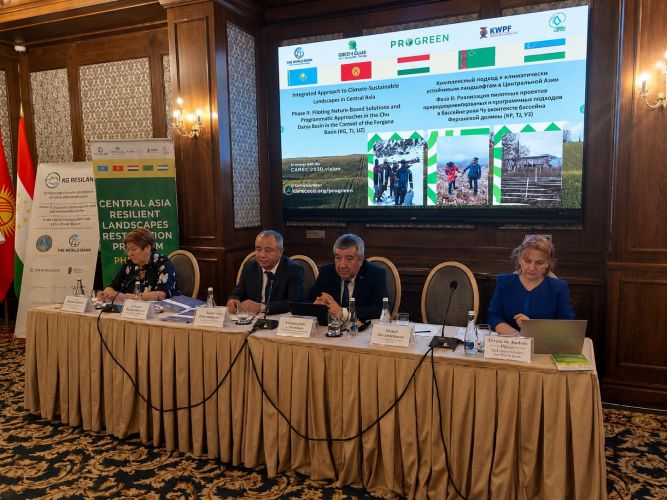
«Climate change affects citizens’ well-being, nature, ecosystems, water resources, and the economy. Countries in the region face cross-border natural disasters and land degradation, and these problems cannot be solved individually,» he said.
He added that the country is particularly interested in studying modern digital platforms and knowledge management systems that would enable timely data exchange and improve forecasting accuracy to prevent emergencies. He also stressed that land restoration requires a deep understanding of risks and that sustainable environmental management must be built primarily at the local level.
Executive Director of the Regional Environmental Centre for Central Asia Batyr Mamedov presented two key initiatives currently being developed for the region.
The first is a regional roadmap to reduce the impacts of cross-border mudflows and floods, supported by an investment plan. The second is a regional online catalogue of existing and forecast climate-related natural disasters.
It is important not only to collect the data but also to develop the catalogue’s structure and ensure the credibility of the information it will contain.
Batyr Mamedov
Experts say the new digital tools are expected to improve data sharing among countries, enhance risk forecasting, and strengthen coordination in emergency response.


