
"Tashiev, come!" Why SCNS Chairman became symbol of hope and fear in regions
For over two weeks, the Chairman of the State Committee for National Security of Kyrgyzstan (SCNS), Kamchybek Tashiev, has been dominating the news, tabloid headlines, and social media discussions. His name has been at the center of the most high-profile arrests this summer. Region by region, district by district, mayors, heads of rural administrations, leaders of construction companies, and officials of various levels—dozens of individuals have been detained on suspicion of corruption and abuse of power.
All of this is happening against the backdrop of public meetings with Kamchybek Tashiev, held in regional and district administrations. It seems that every such meeting is a harbinger of loud news.
Undoubtedly, the actions of the SCNS head have had an effect: they demonstrate political will at the highest levels and strengthen citizens’ trust in the fight against corruption. In almost every case, the initiative for these arrests has come from simple citizens, signals from the regions, and complaints on social media.
For example, recently in Bishkek, arrests were made at the City Hall, including that of the Vice Mayor, Zhamalbek Yrsaliev, which triggered a wave of complaints from city residents. This was followed by a flood of messages from all over the country.
«Tashiev, come!» — a new form of request for justice
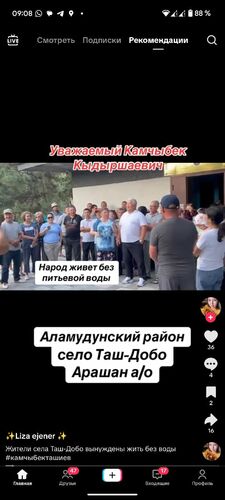
On social media, in messengers, and even on street billboards, people from different parts of Kyrgyzstan no longer write to their local authorities but directly to the head of the SCNS.
- Residents of the village of Vorontsovka in Chui region are asking Kamchybek Tashiev to «come and help with the water issue.»
- In Osh, people are turning to him for help in resolving issues related to illegal house demolitions.
- In the village of Grozd, children recorded a video message asking «uncle Kamchyke» to build a football field and a playground.
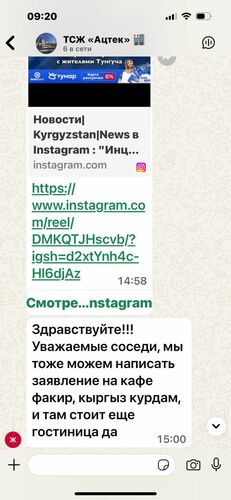
- In parents’ chat groups and on forums of residents of apartment buildings, more and more suggestions are appearing: «Let’s invite Tashiev, maybe he’ll solve the problem with garbage/ lighting/ the road?»

This situation sets a dangerous precedent—responsibility is being shifted upwards, and instead of systemic solutions, we see situational crisis management measures. While they are effective in the moment, the question remains: how long can the head of the SCNS continue to serve as the universal responsible authority for everything?
The flow of requests to Kamchybek Tashiev is not just a PR stunt or a hope for «forceful solutions» — it is a marker of the crisis of trust in local authorities. At the same time, it shows a belief that someone at the top might still listen and help.
The SCNS continues its work. After the arrests at Bishkek City Hall, other cities and villages follow. The society is waiting. Some are afraid, others are hopeful, but more and more people are looking towards one person.


